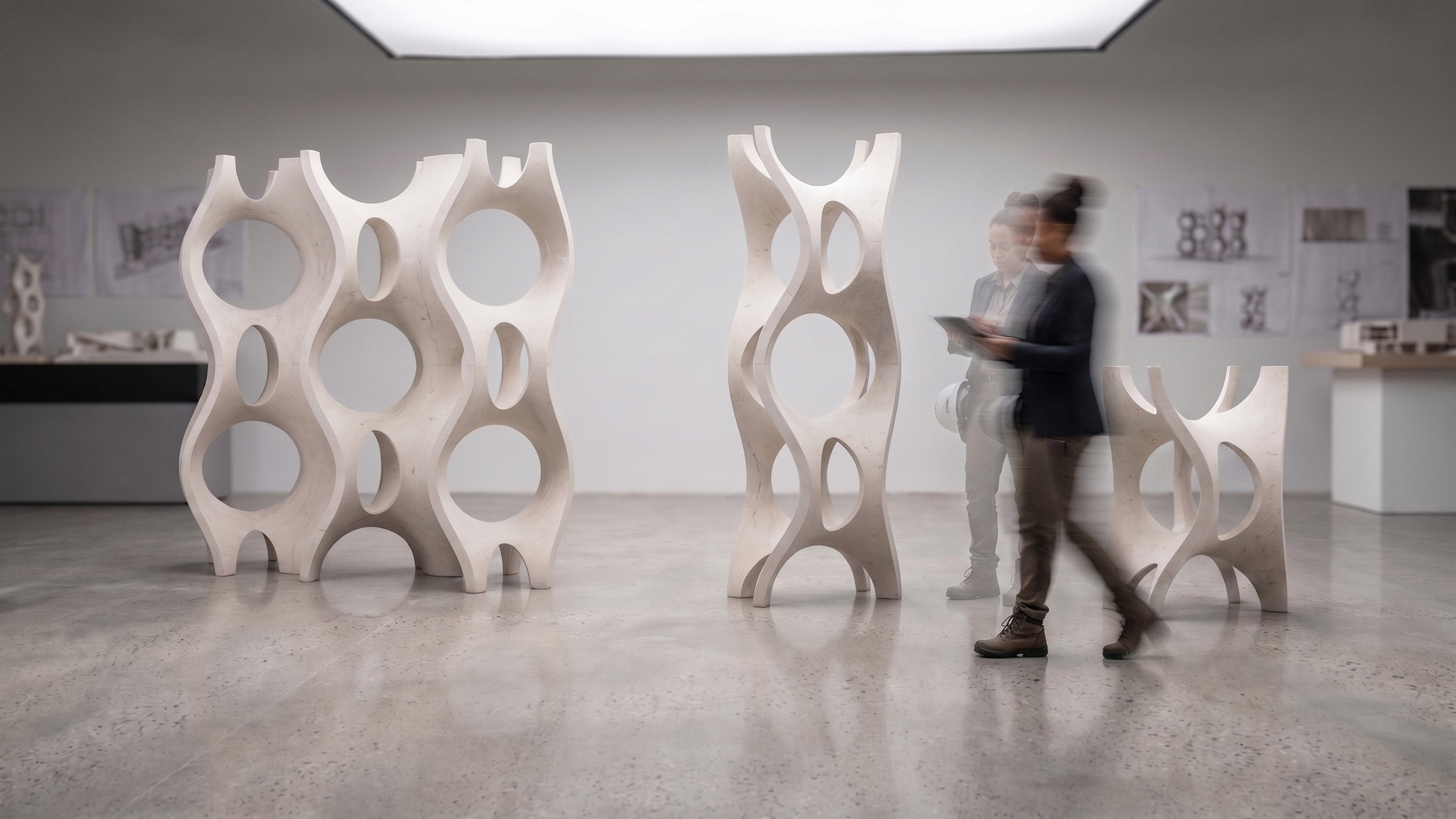
Fluid Stone: Architecture
Fluid Stone proposes a new architectural language for stone based on modular aggregation, where structural systems are generated through geometry rather than mass.
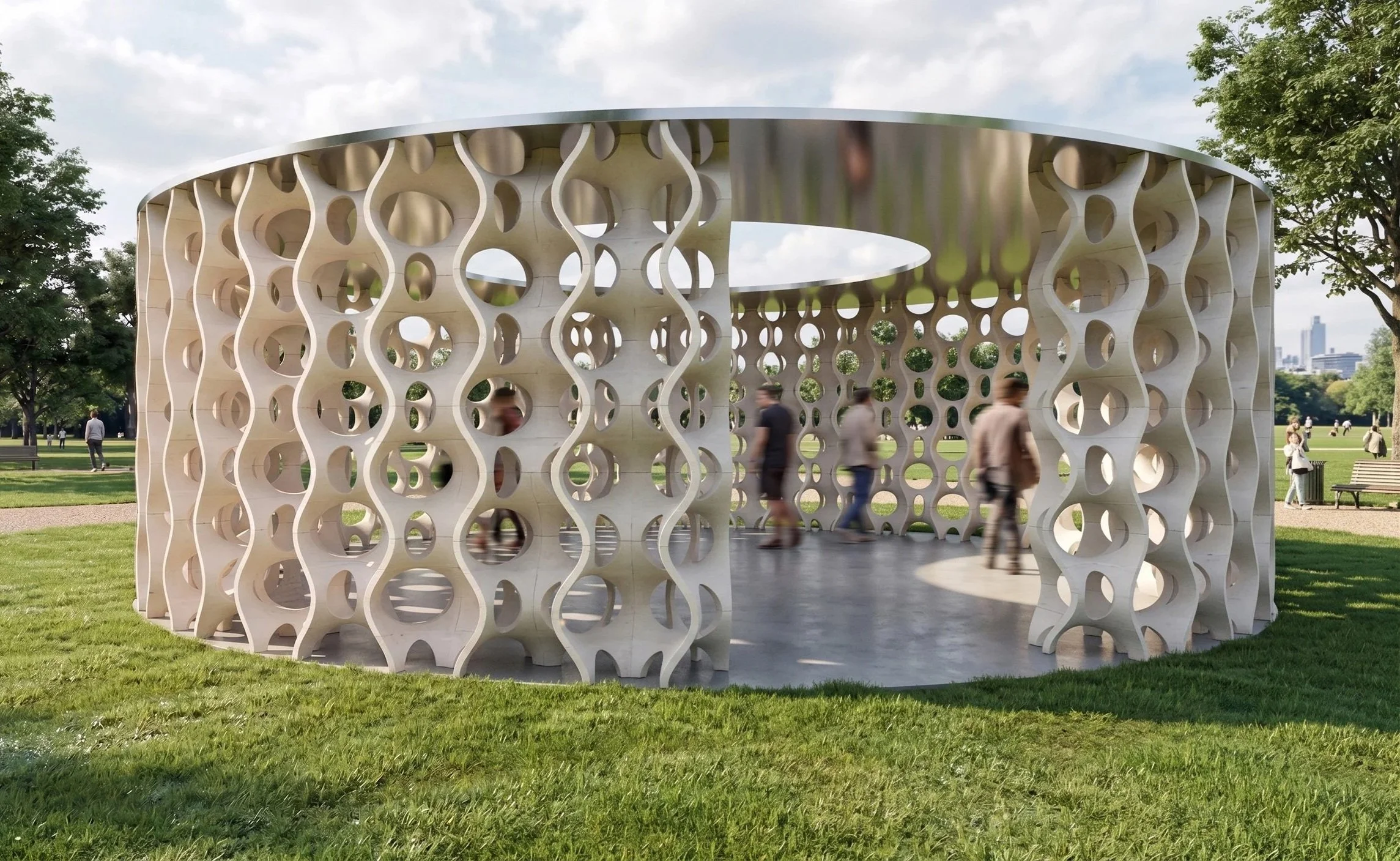
From Component to Habitat
At architectural scale, Fluid Stone evolves into a modular building system capable of creating self-supporting structures, pavilions and façade elements. By aggregating individual components into continuous surfaces, the system generates spaces that combine structural performance, permeability and sculptural expression.
The geometry distributes material efficiently, suggesting new possibilities for stone as a durable, low-maintenance and long-lasting material for contemporary architecture.
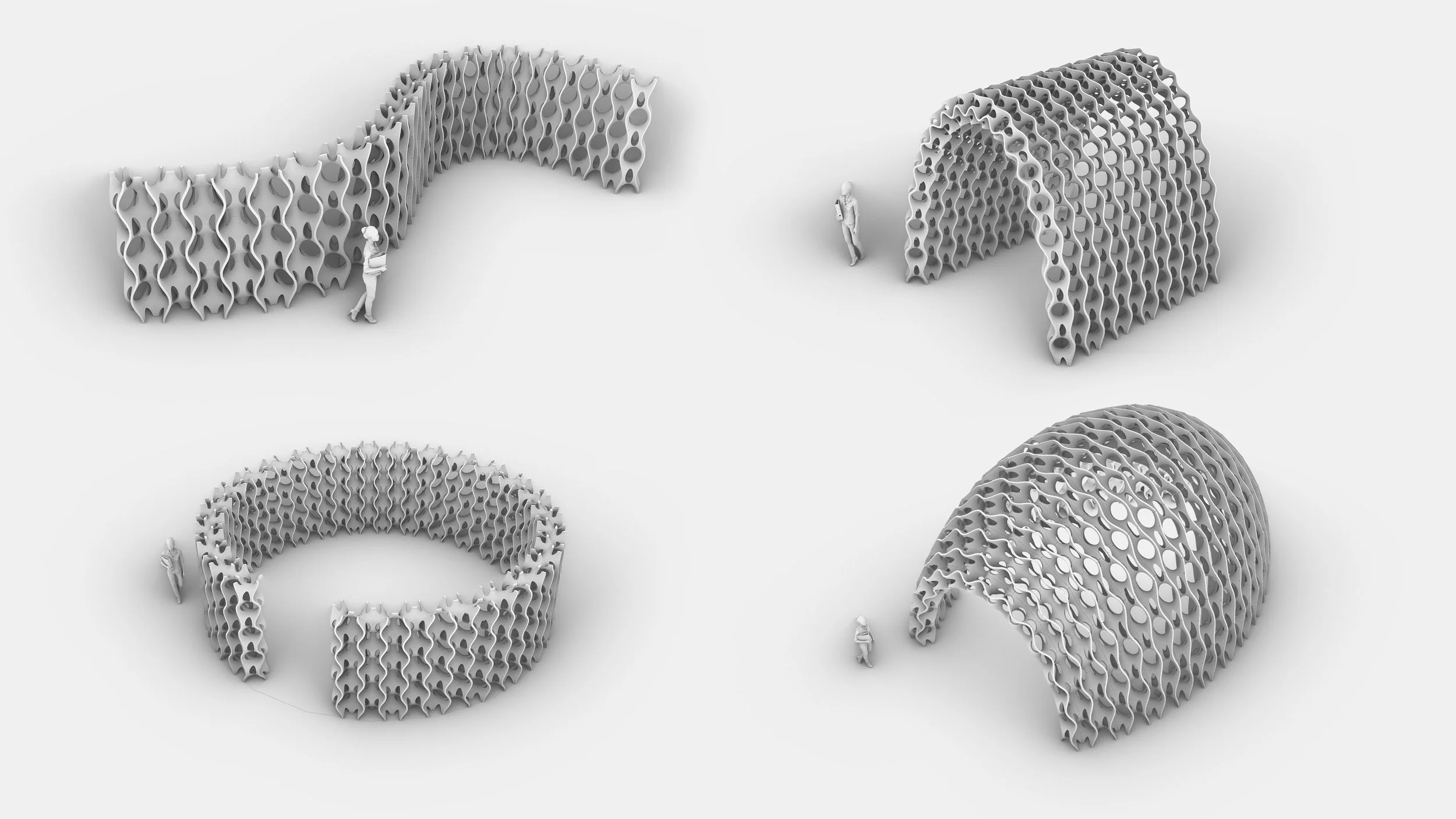
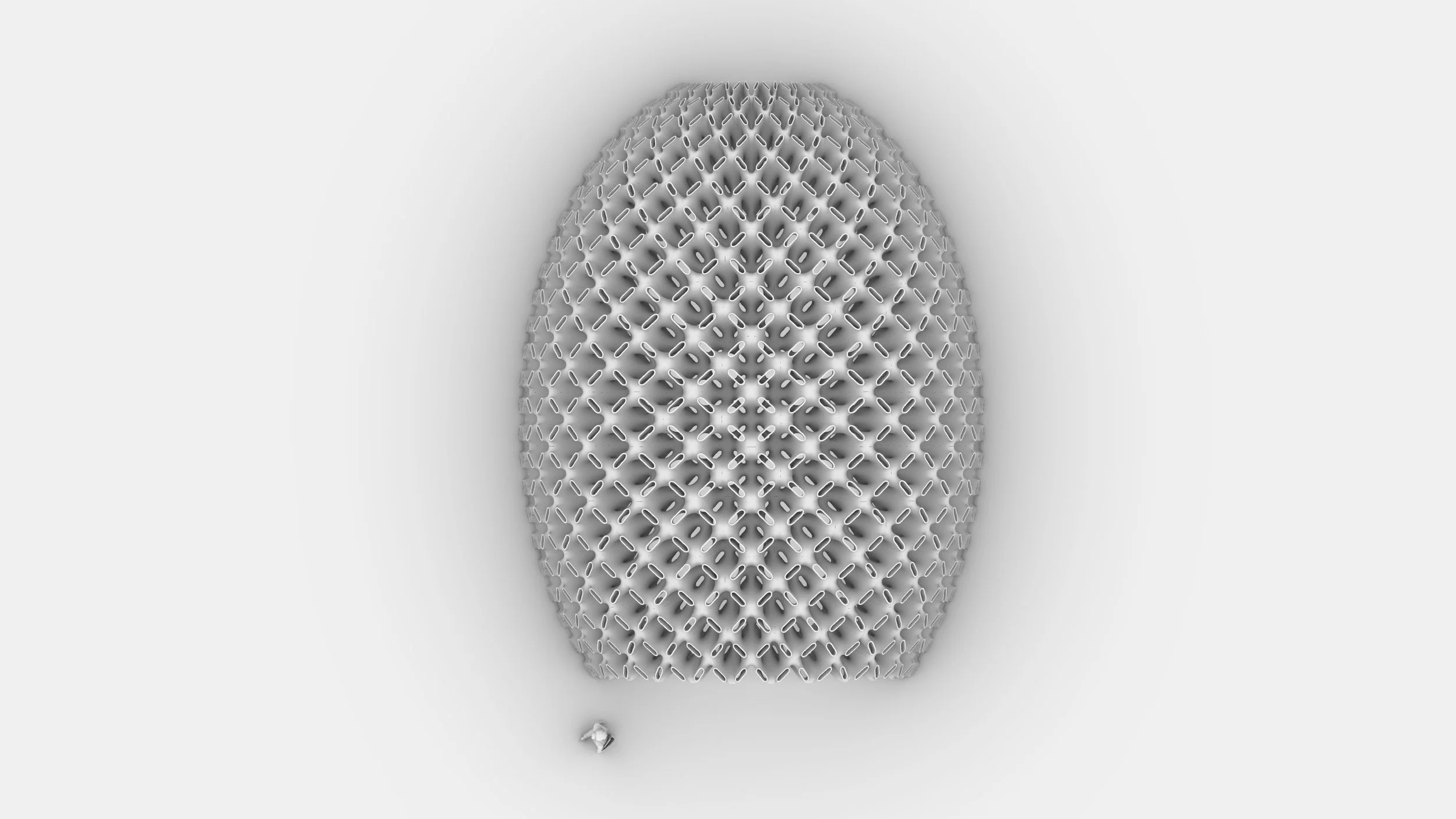
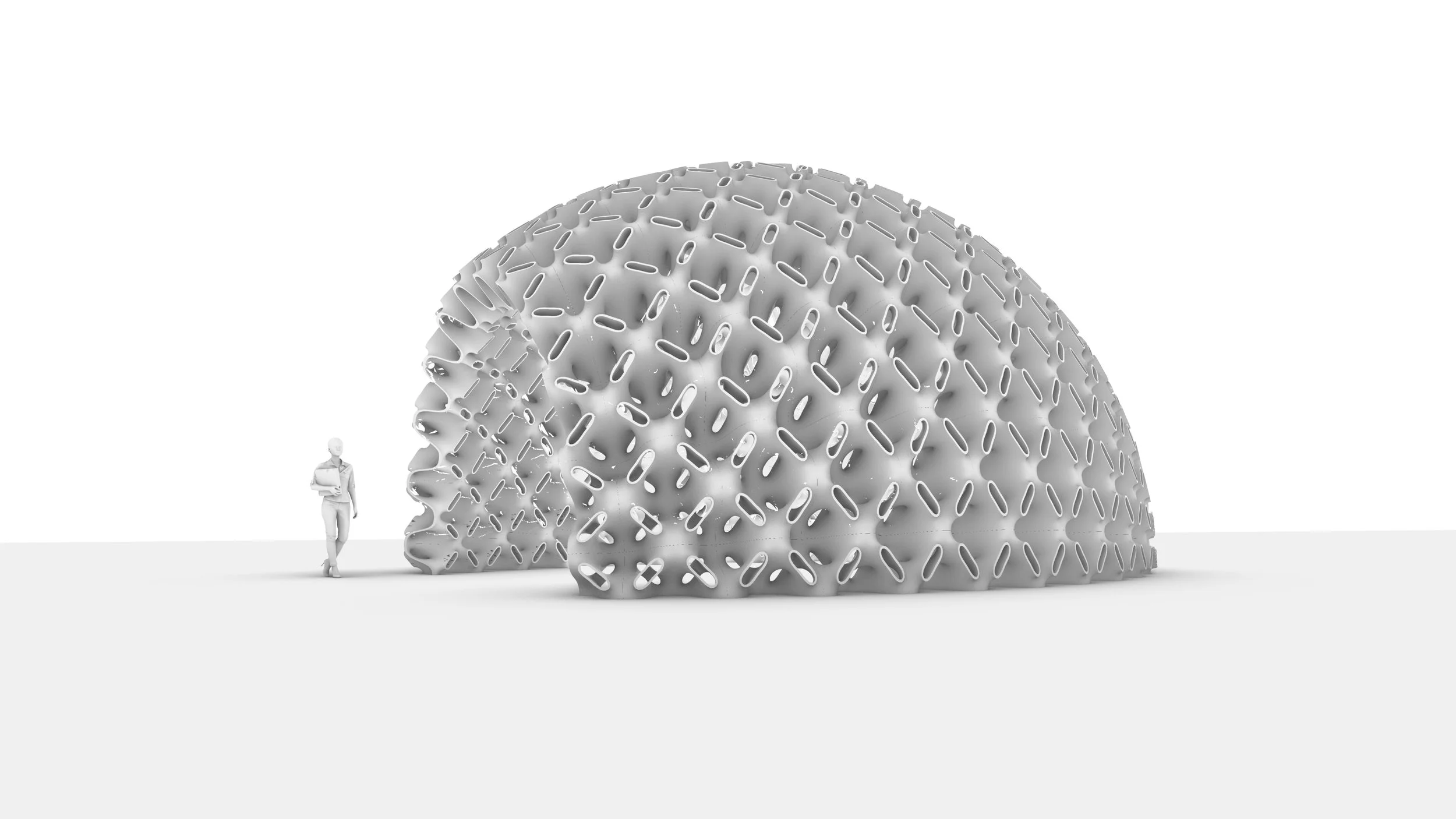
Fluid Stone : Pavilion Configurations
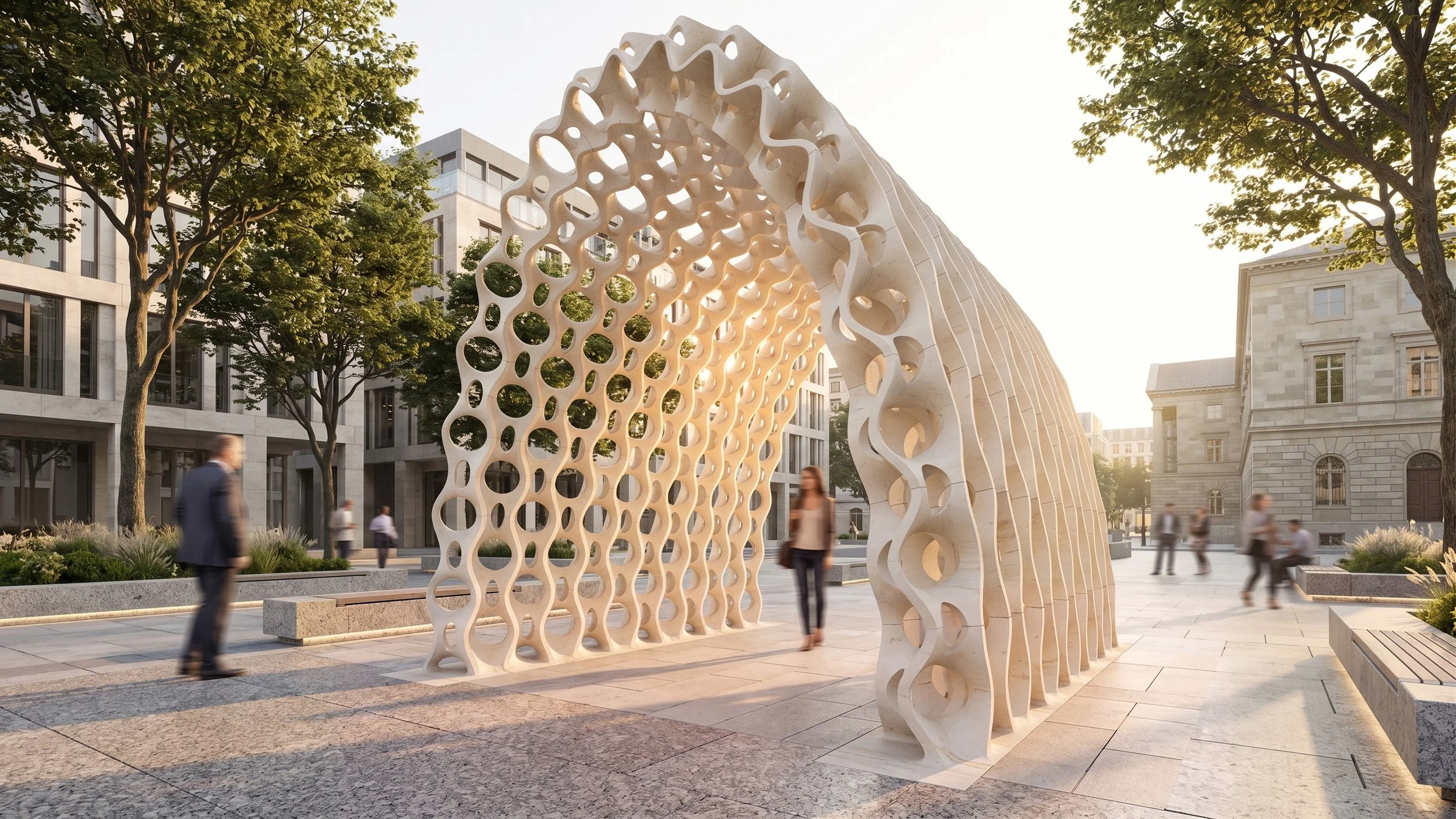
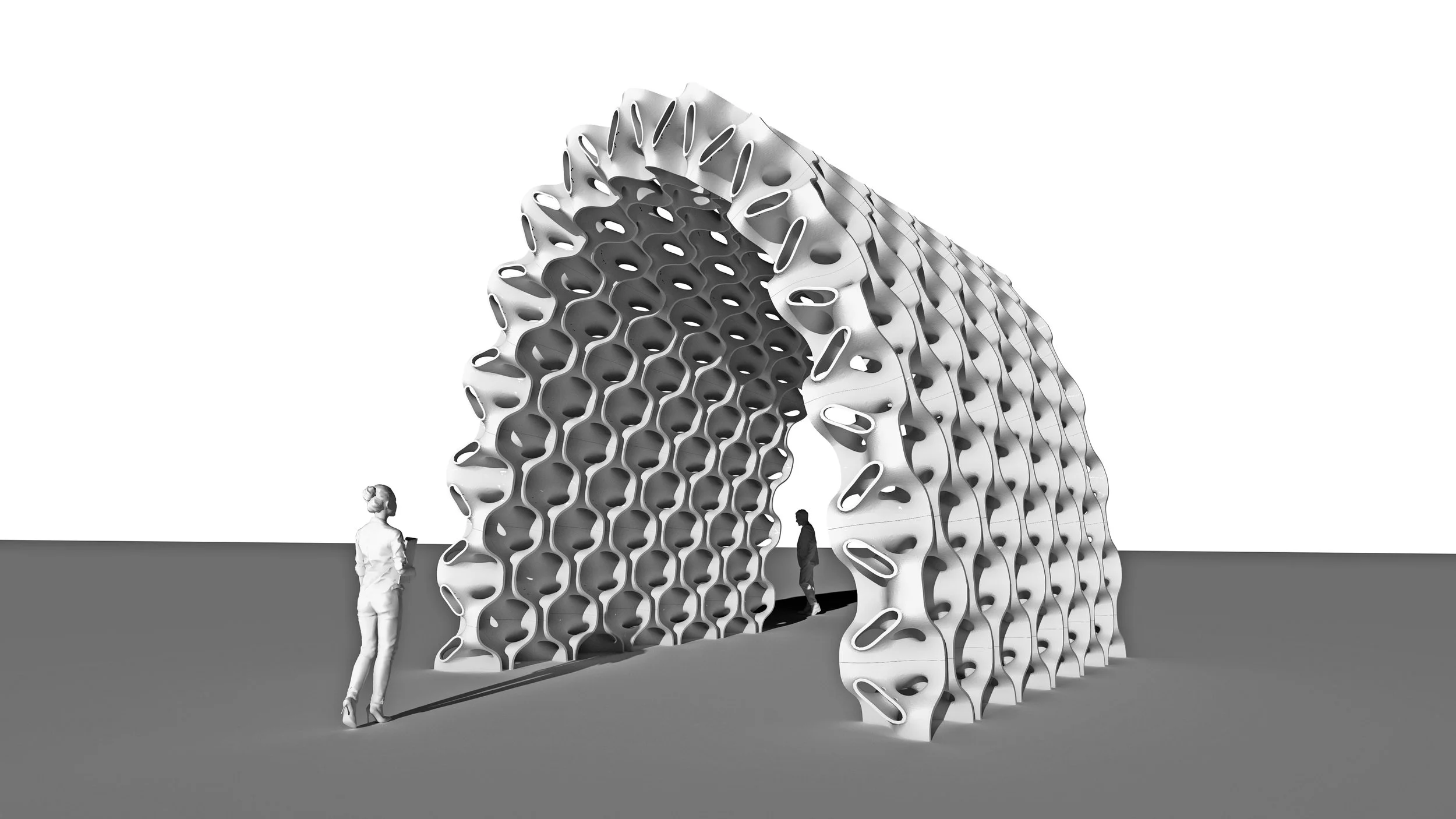
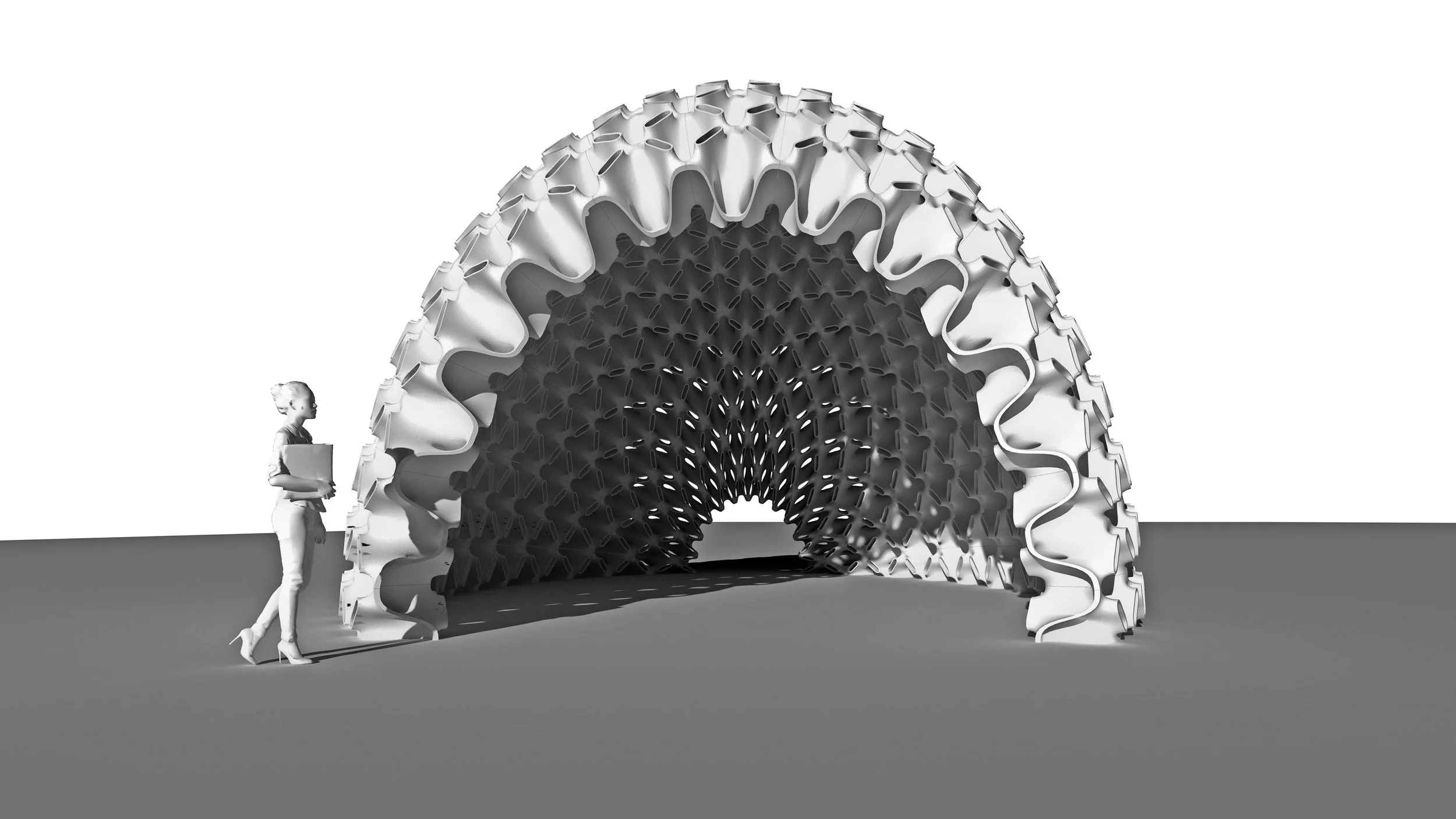
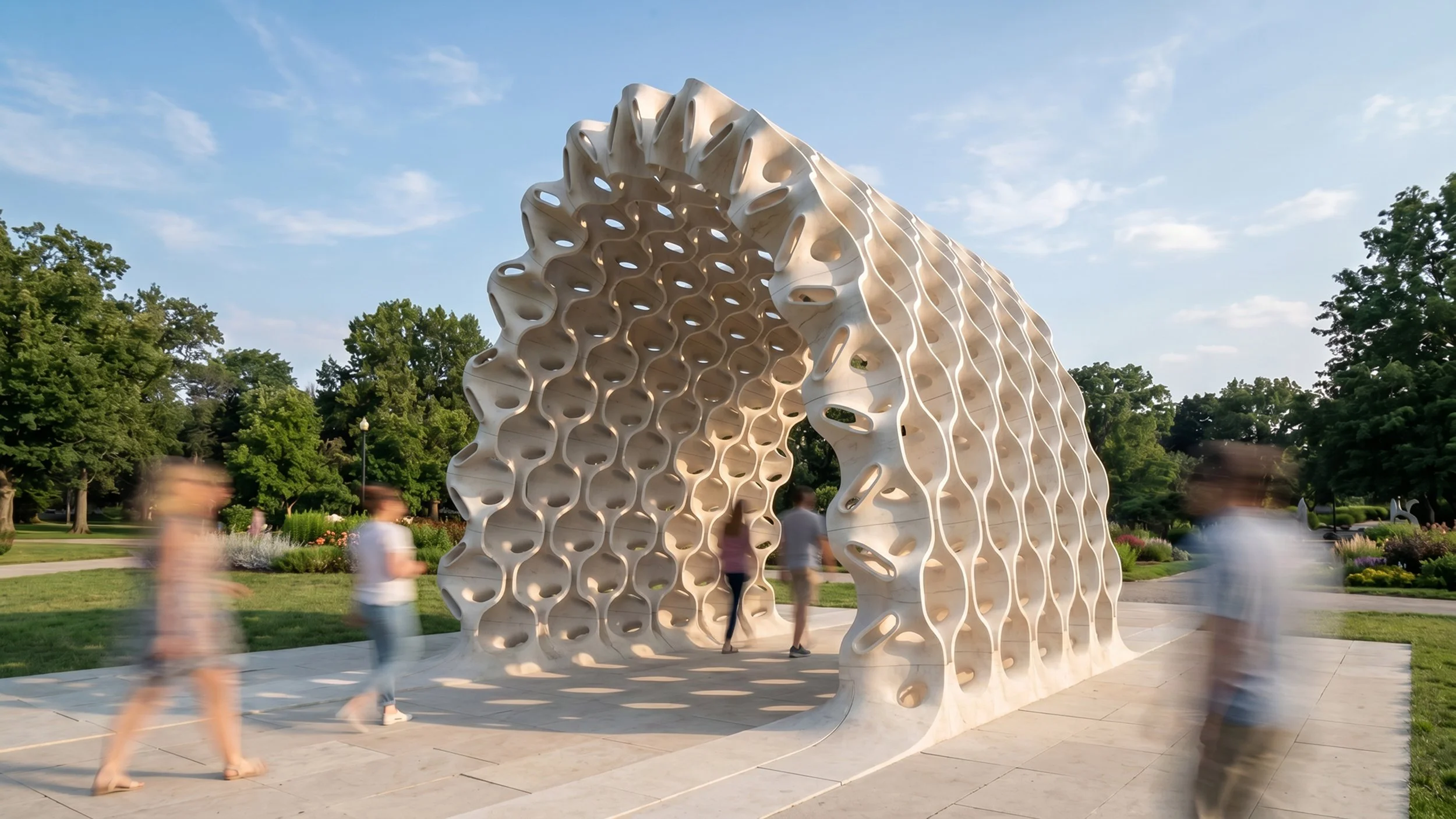
Fluid Stone Catenary Arch
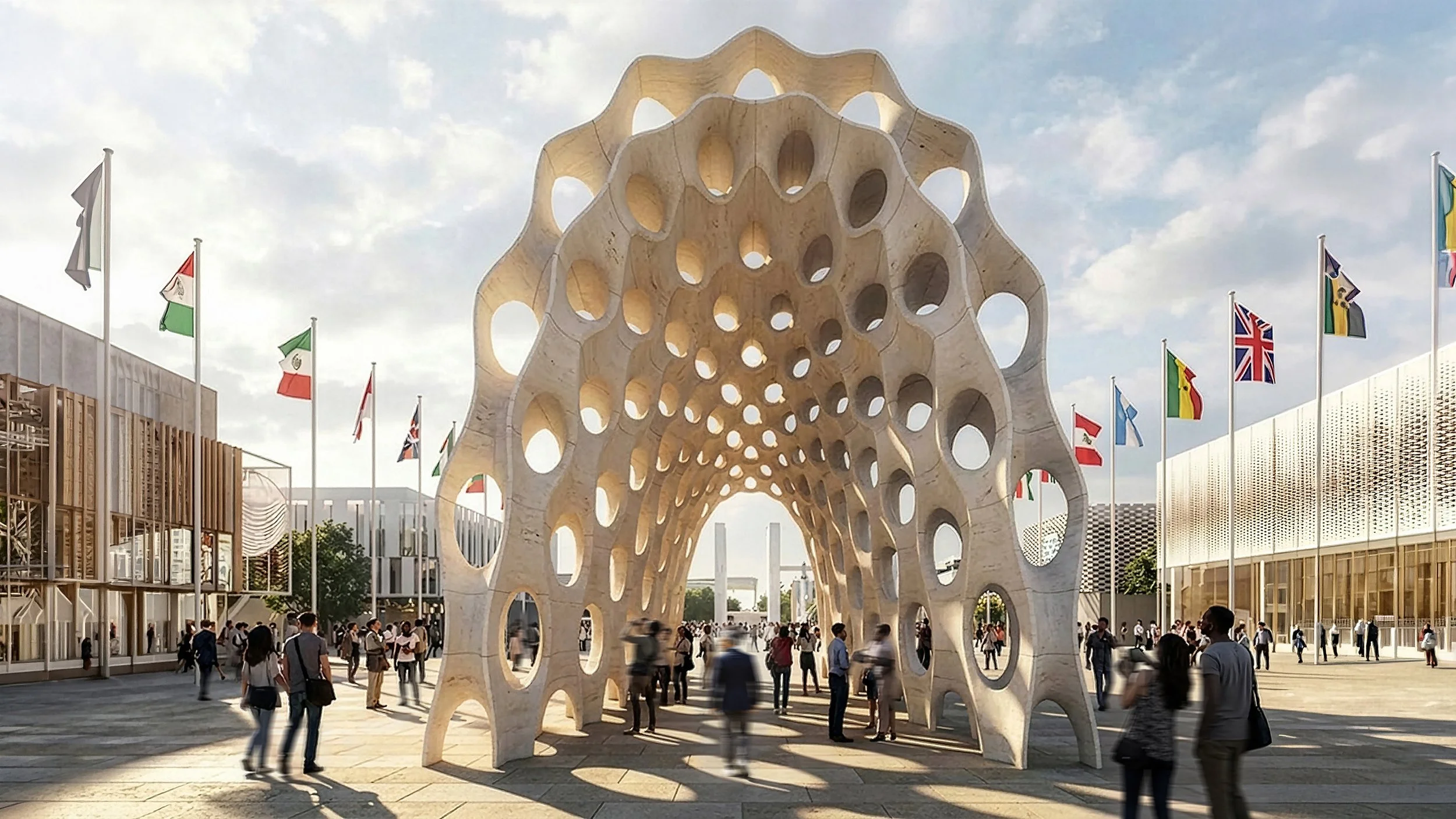
Structure Through Pure Geometry
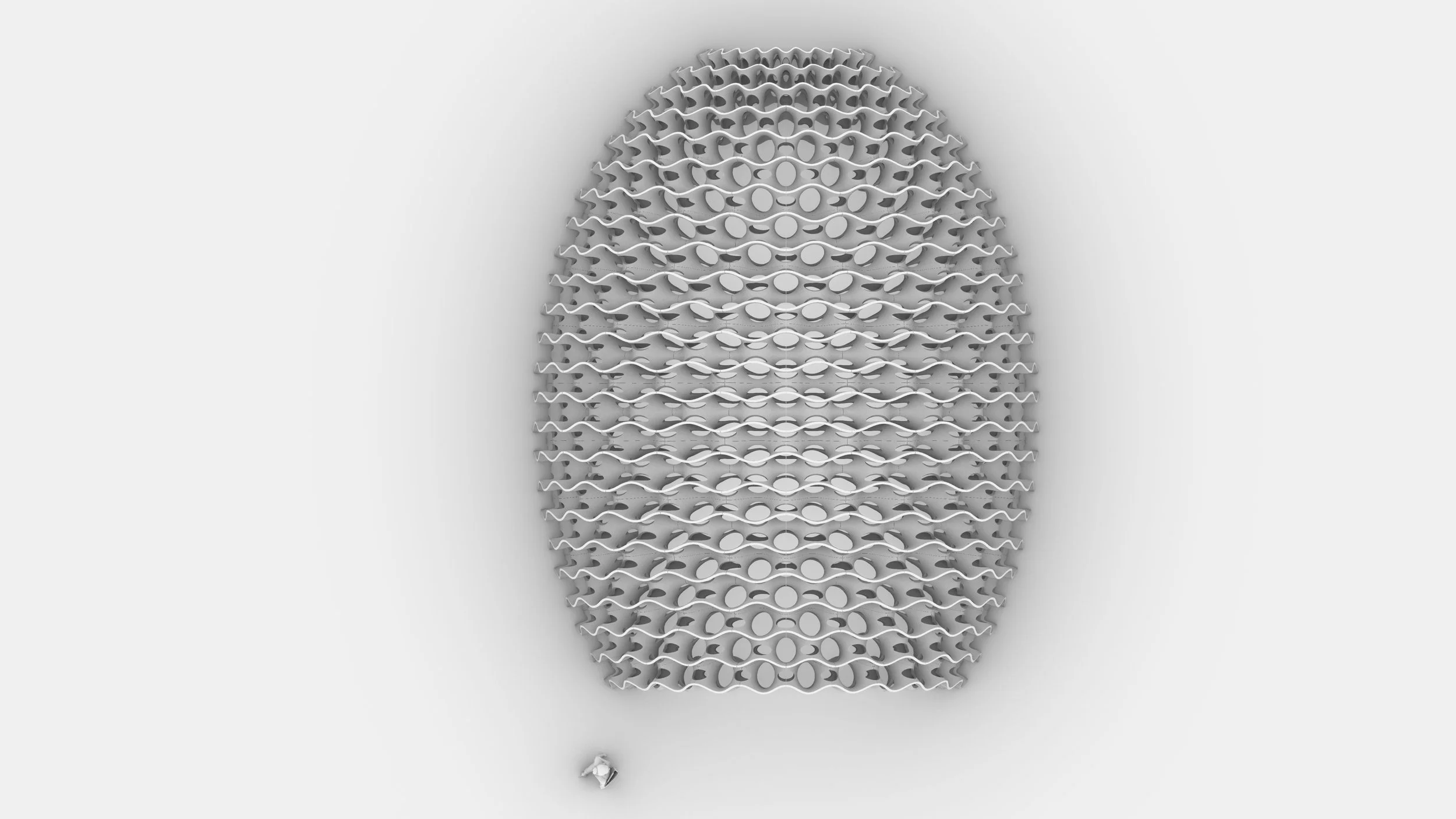
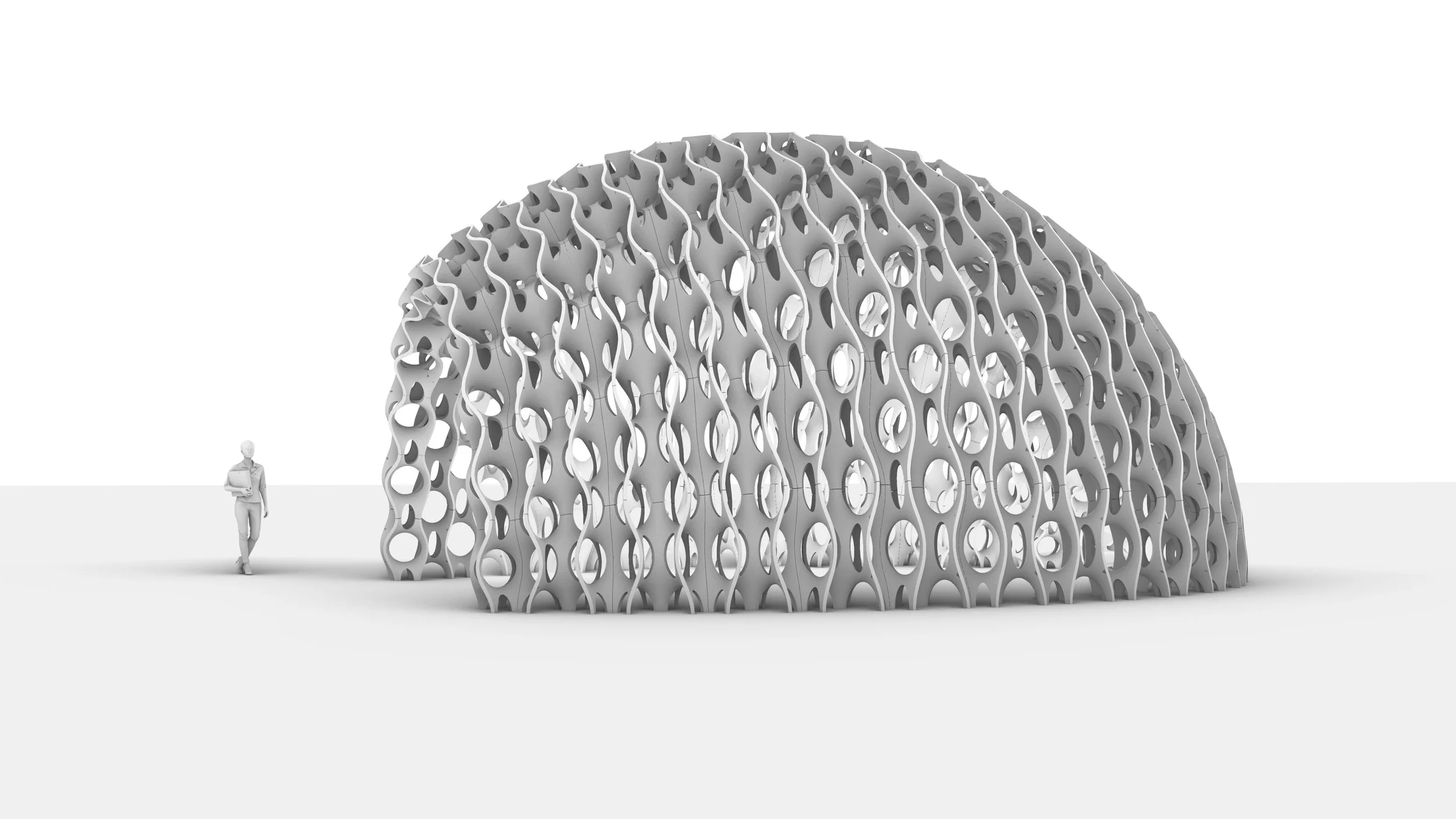
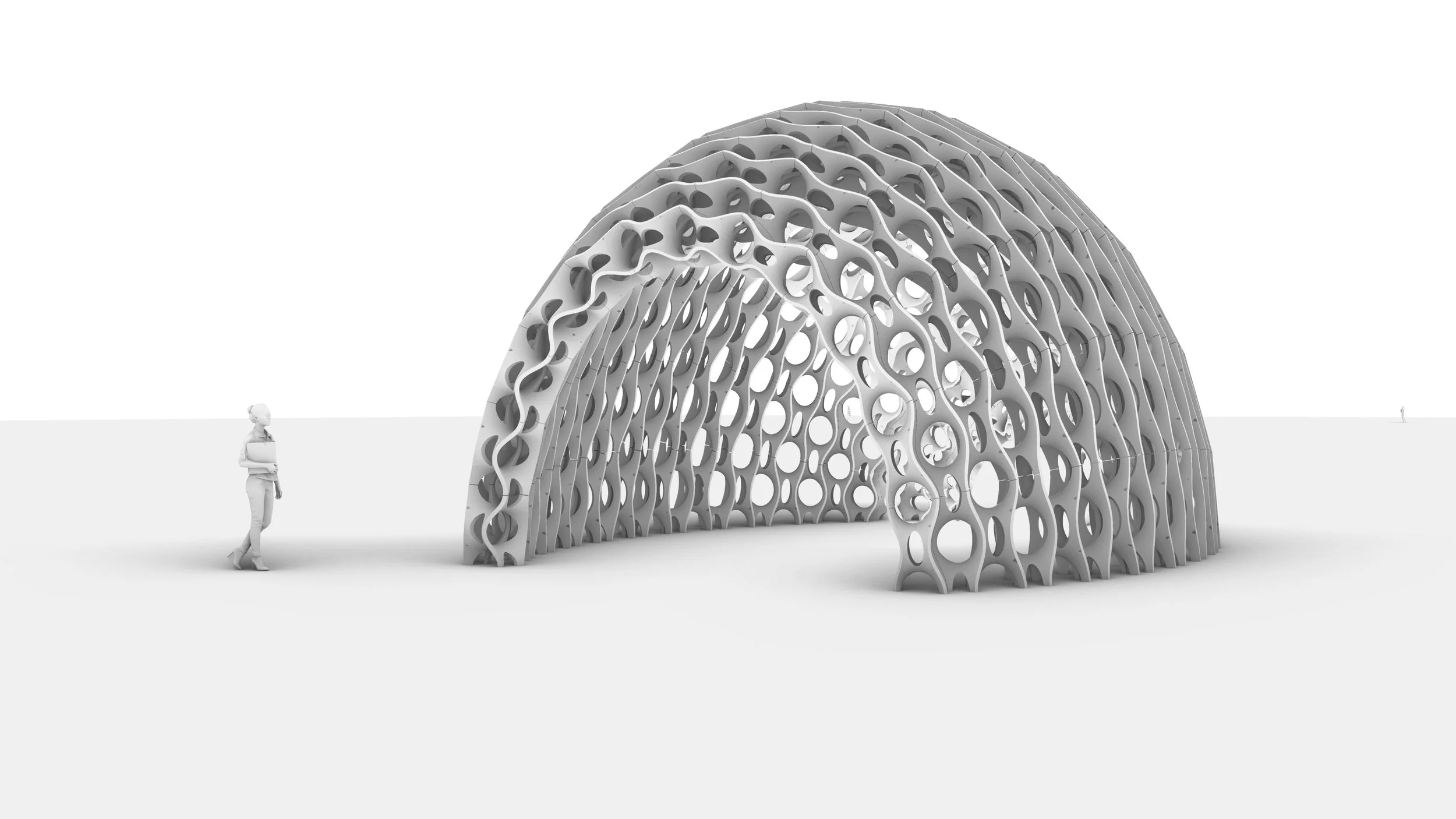
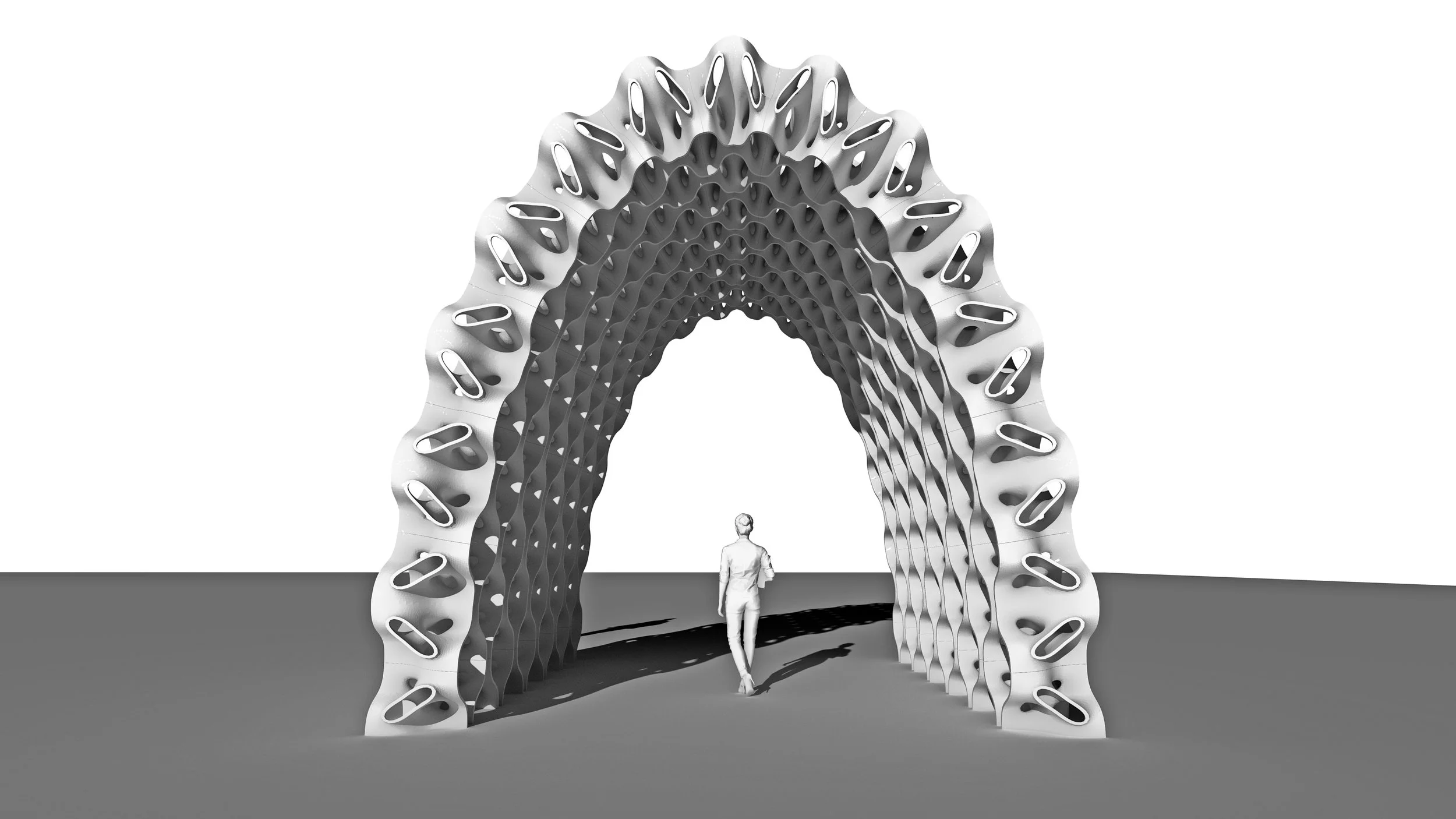
Based on the natural efficiency of the catenary curve, the system distributes compressive forces evenly across continuous chains of interlocking modules, allowing stone to perform primarily in compression while minimising the need for secondary reinforcement or hidden structural frames.
Catenary Arches
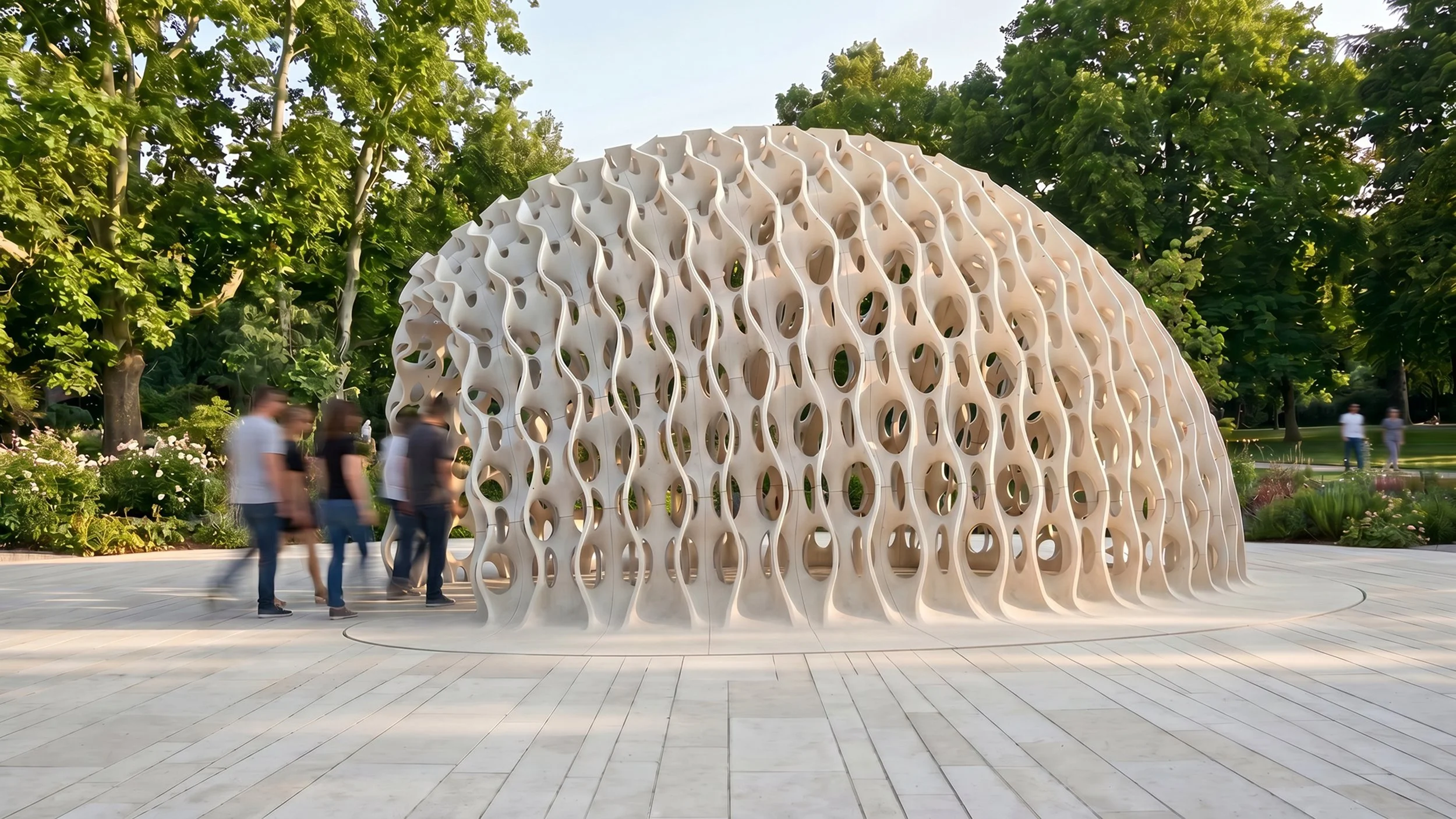
The concept of Fluid Stone catenary arches explores how modular stone components can be organised through structural form-finding principles rather than conventional construction logic, at both macro and micro level.
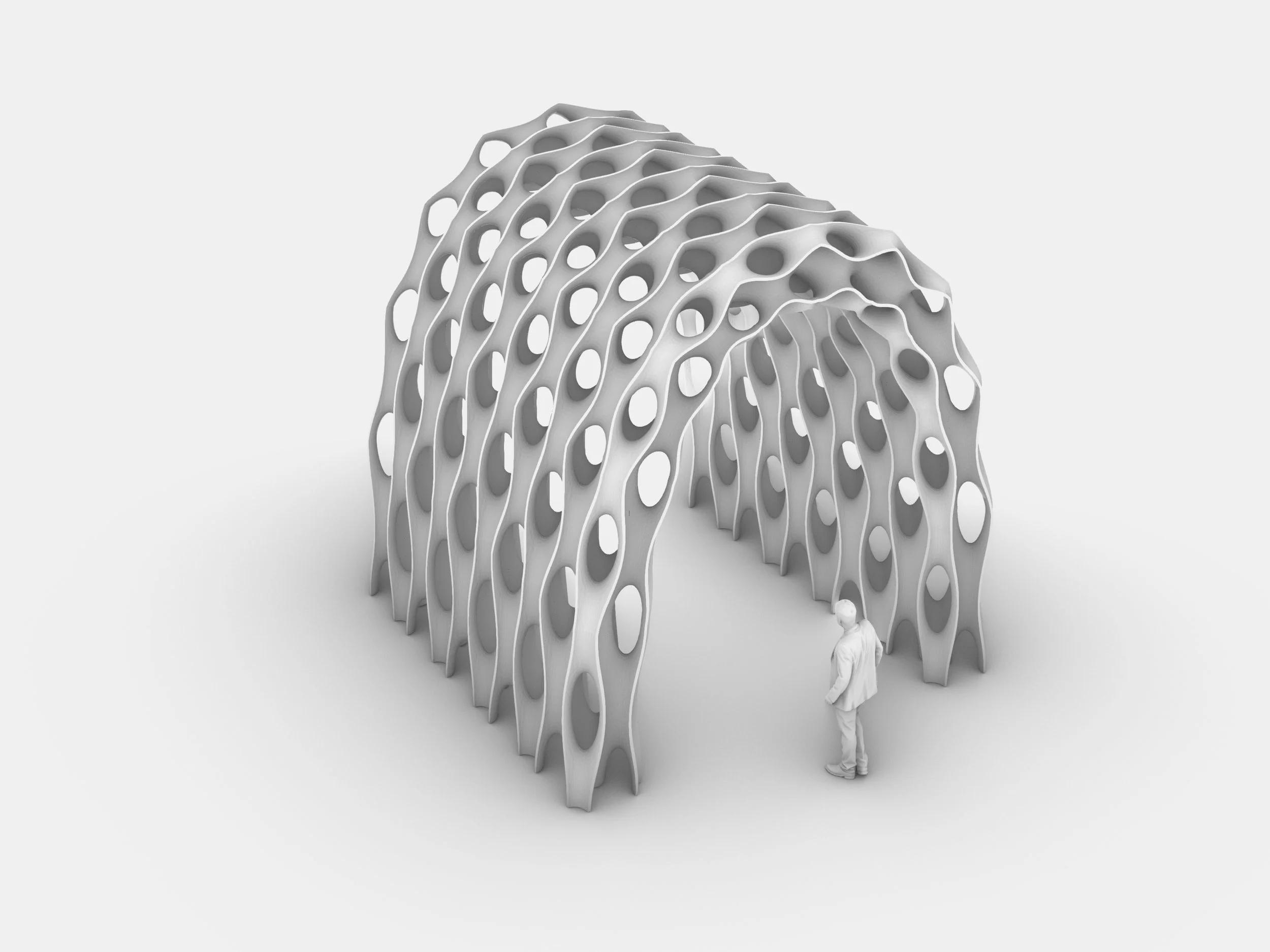
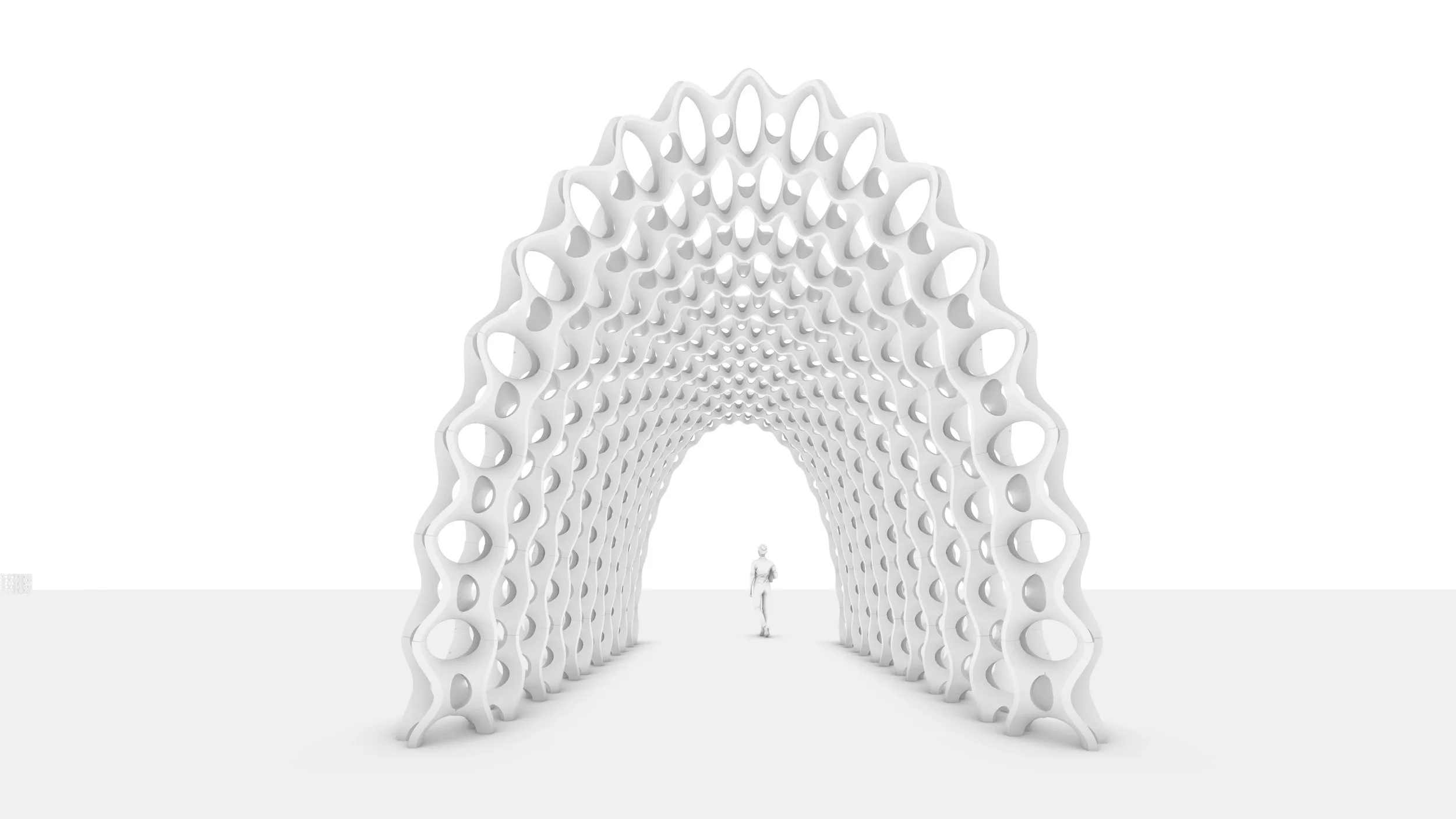
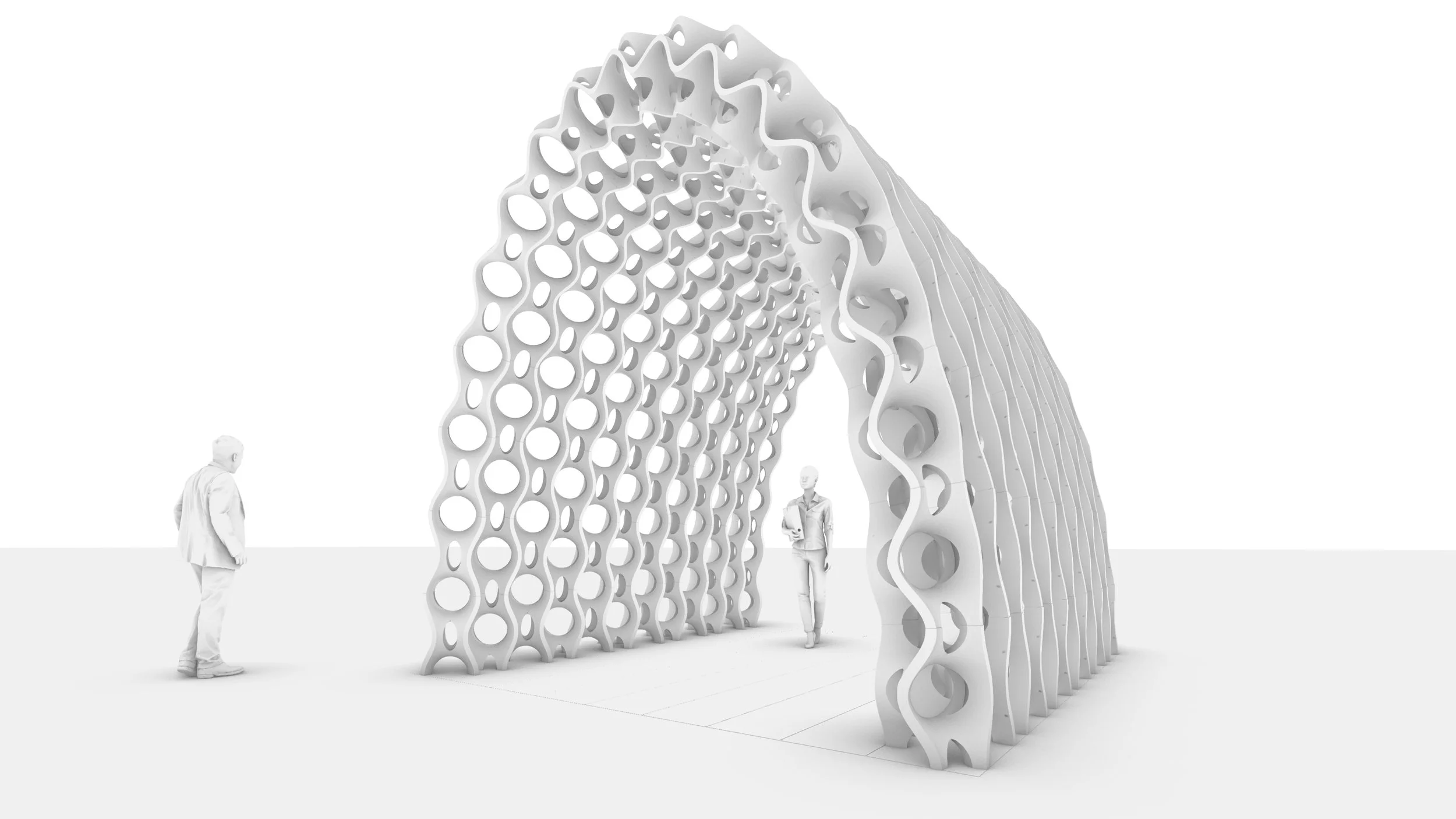
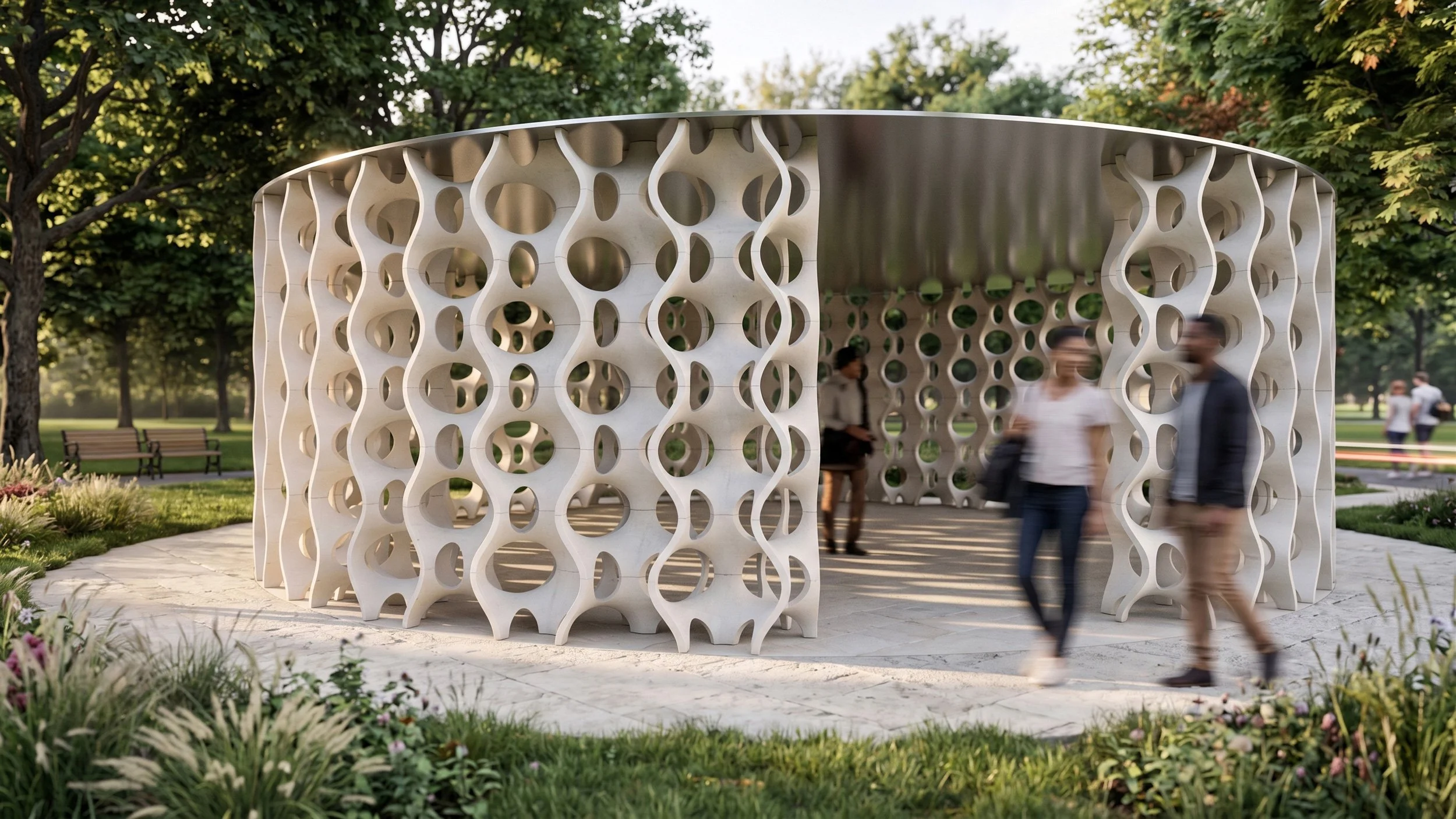
A dynamic architectural system
These pavilions explore stone not as a rigid construction material but as a dynamic architectural system—capable of forming lightweight yet durable environments that combine structure, ornament and spatial experience within a continuous modular language.
Load-bearing capacity is distributed across the entire system, allowing the geometry of each module to contribute to overall stability while enabling porous, permeable and spatially rich configurations.
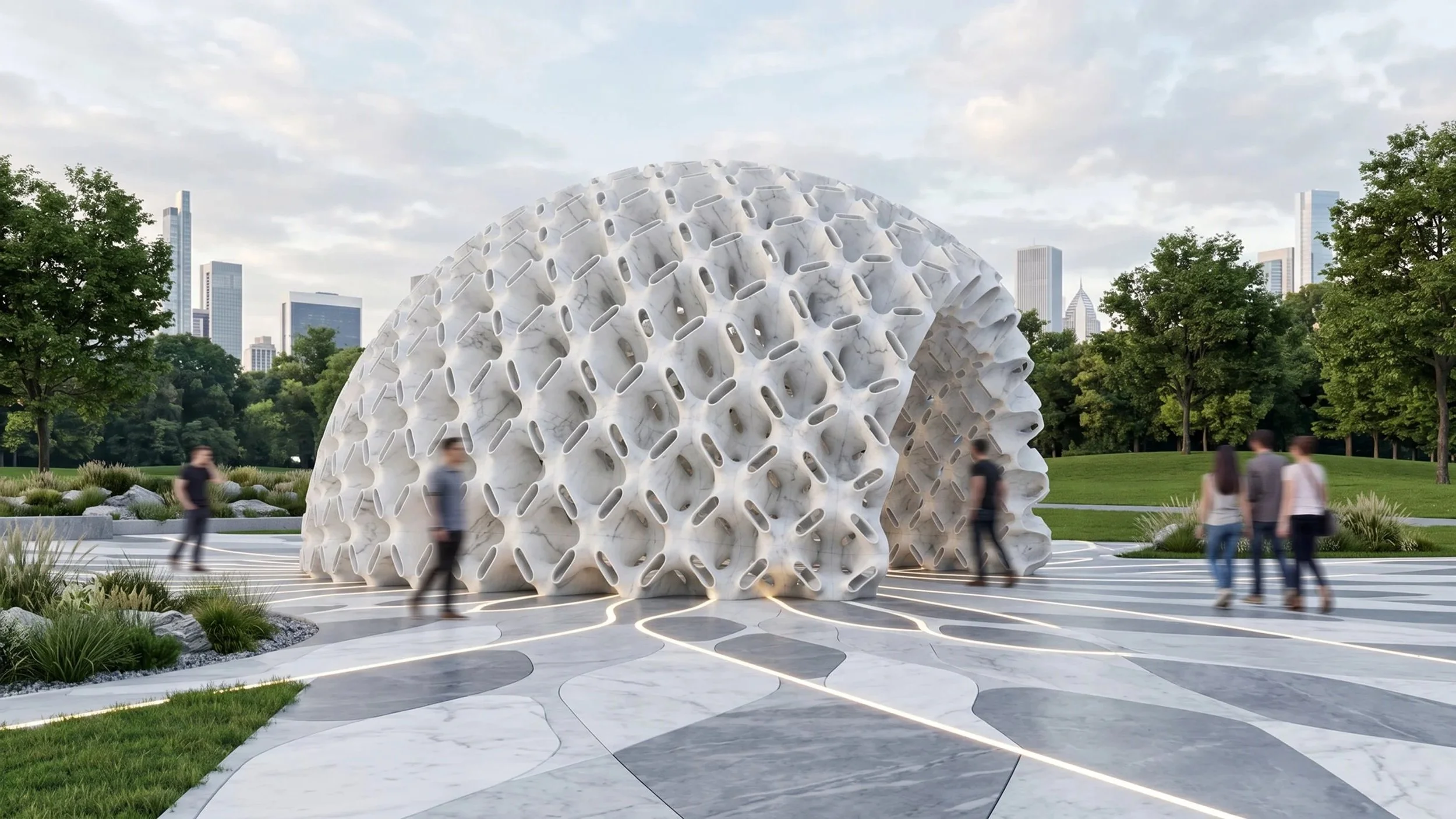
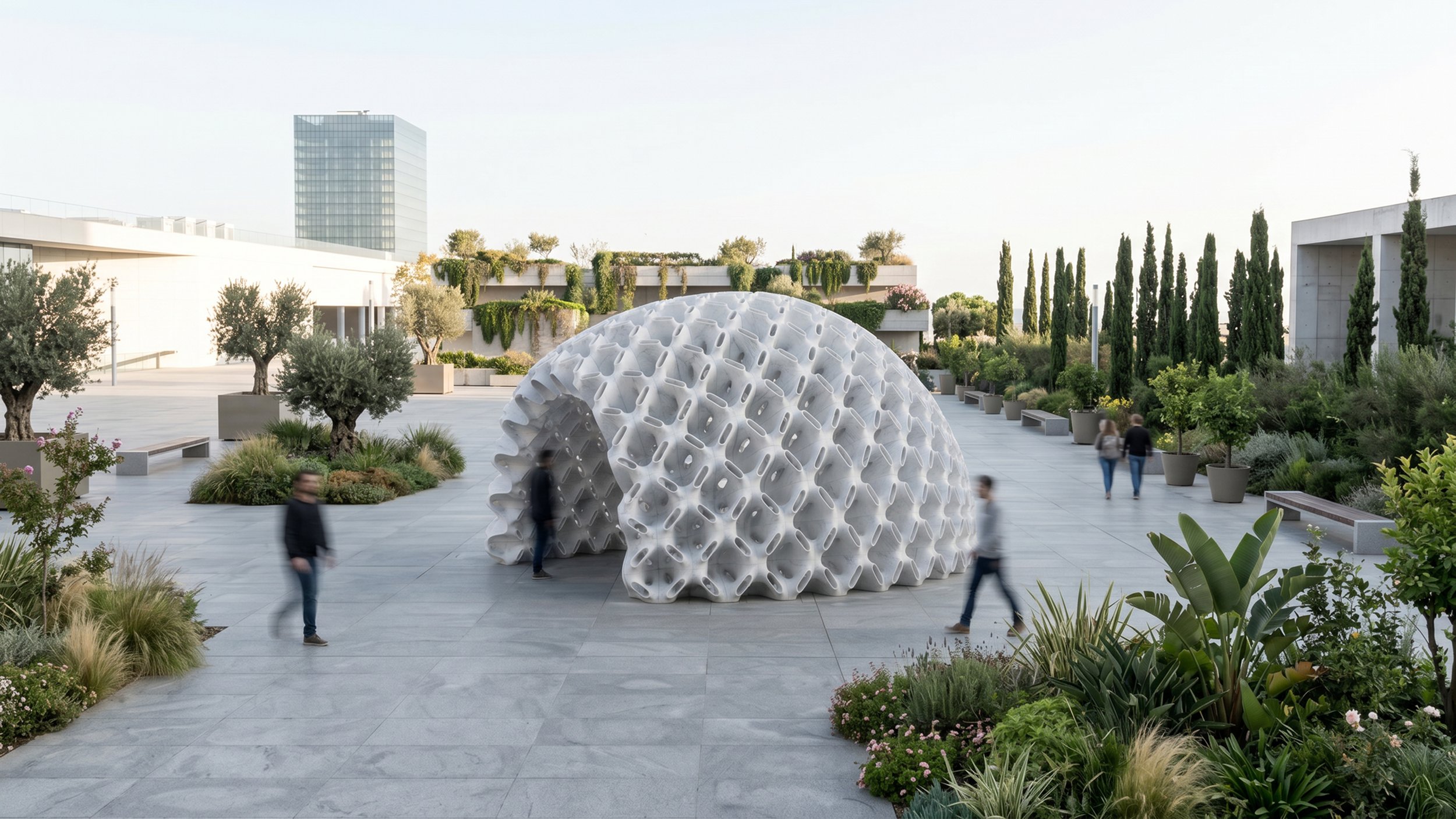
Stone Pavilions
Aggregation as Architecture
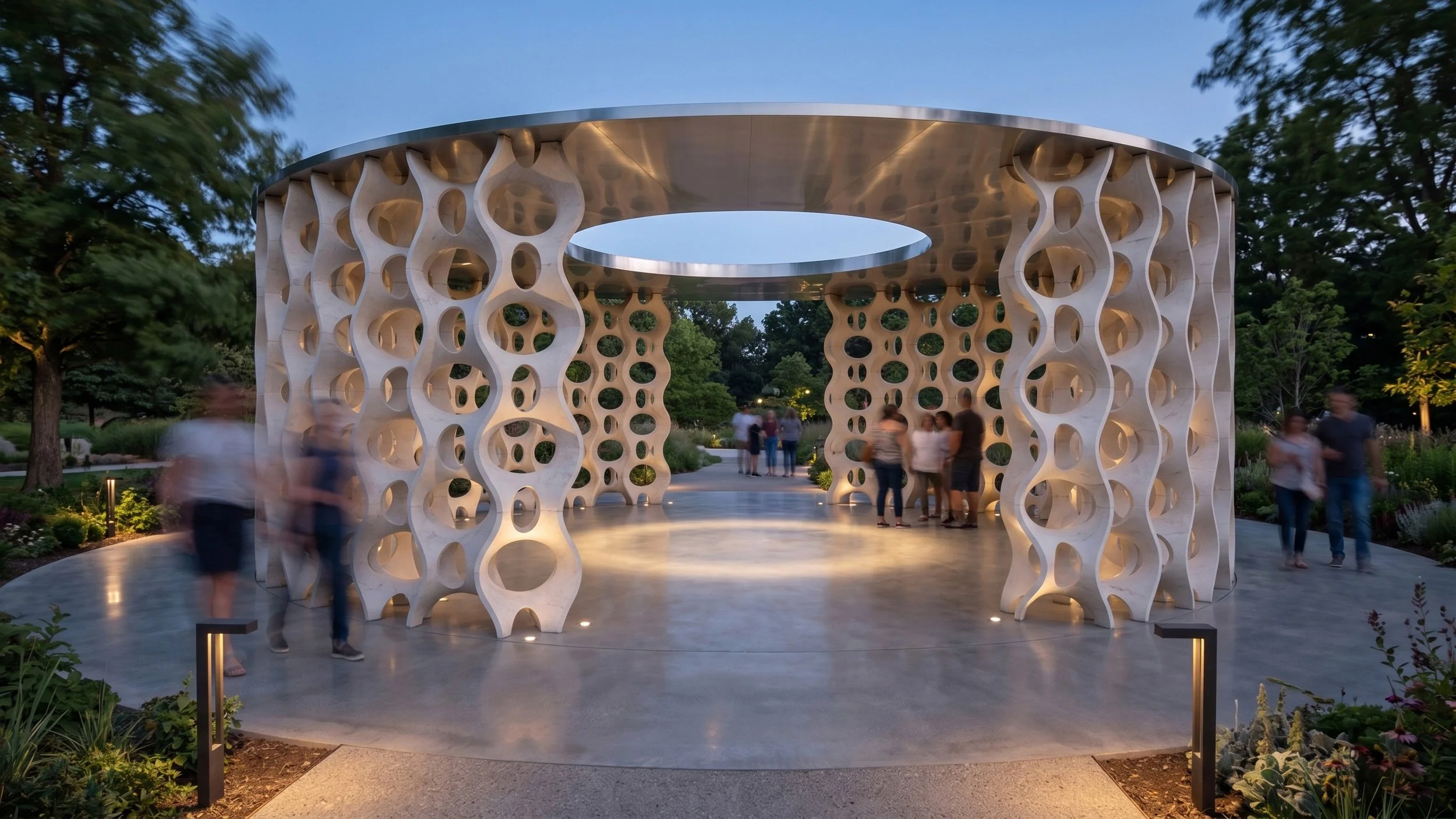
Fluid Stone pavilions extend the modular system into full architectural environments, where individual components are aggregated into self-supporting spatial screens. Unlike the catenary arches, which are governed by a single structural logic, the pavilion systems operate as open fields of modules capable of forming enclosures, thresholds and inhabitable spaces.
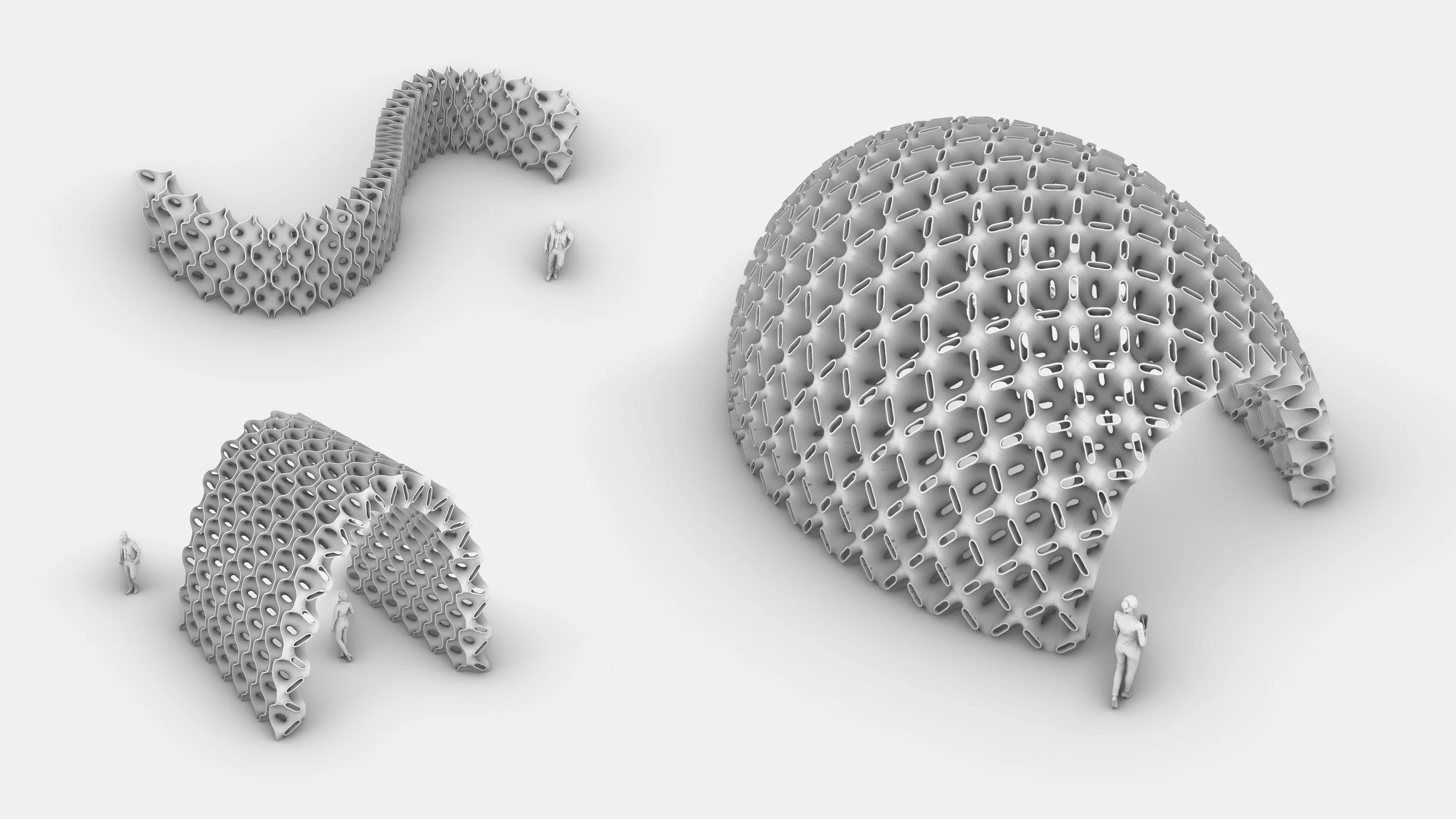
A spectrum of Geometries
From walls to catenary arches to ‘igloo’ shaped pavilions
By varying the underlying geometry, the density of the modules and their arrangement, the system can generate a wide range of visual and spatial effects—from highly permeable screens that allow light and views to pass through, to denser configurations that create enclosure, intimacy and acoustic separation.
Fluid Stone: Type N Series

Let's explore what's possible.
Fluid Stone is designed to adapt to new contexts and scales. If you're interested in commissioning a piece, developing a bespoke application or exploring a collaboration, we'd love to hear your ideas.