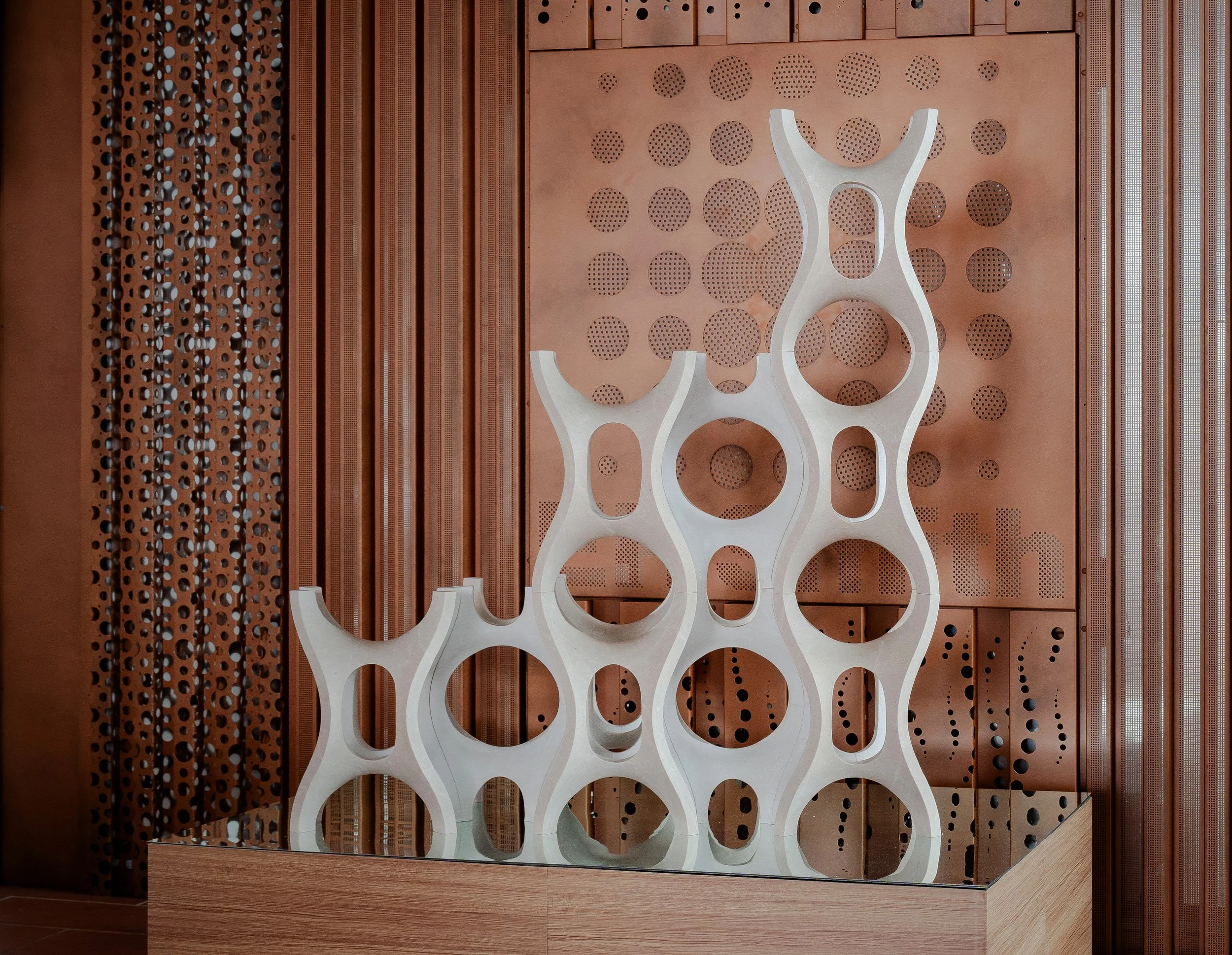
FLUID STONE 2026
Reimagining Stone through Geometry, Robotic Fabrication and Circular Design
Photo: Neil Perry for EH Smith

A modular stone system
Fluid Stone is a modular stone installation by Vlad Tenu & Cereser Marmi that reimagines the traditional building block as a fluid, reconfigurable system. Using quarry waste stone, advanced computational design and robotic fabrication, the project creates lightweight yet strong geometries inspired by natural microstructures.
The result is a versatile system that can be assembled into furniture, partitions, structural or architectural elements—proposing a more sustainable, adaptable future for stone in design and construction.
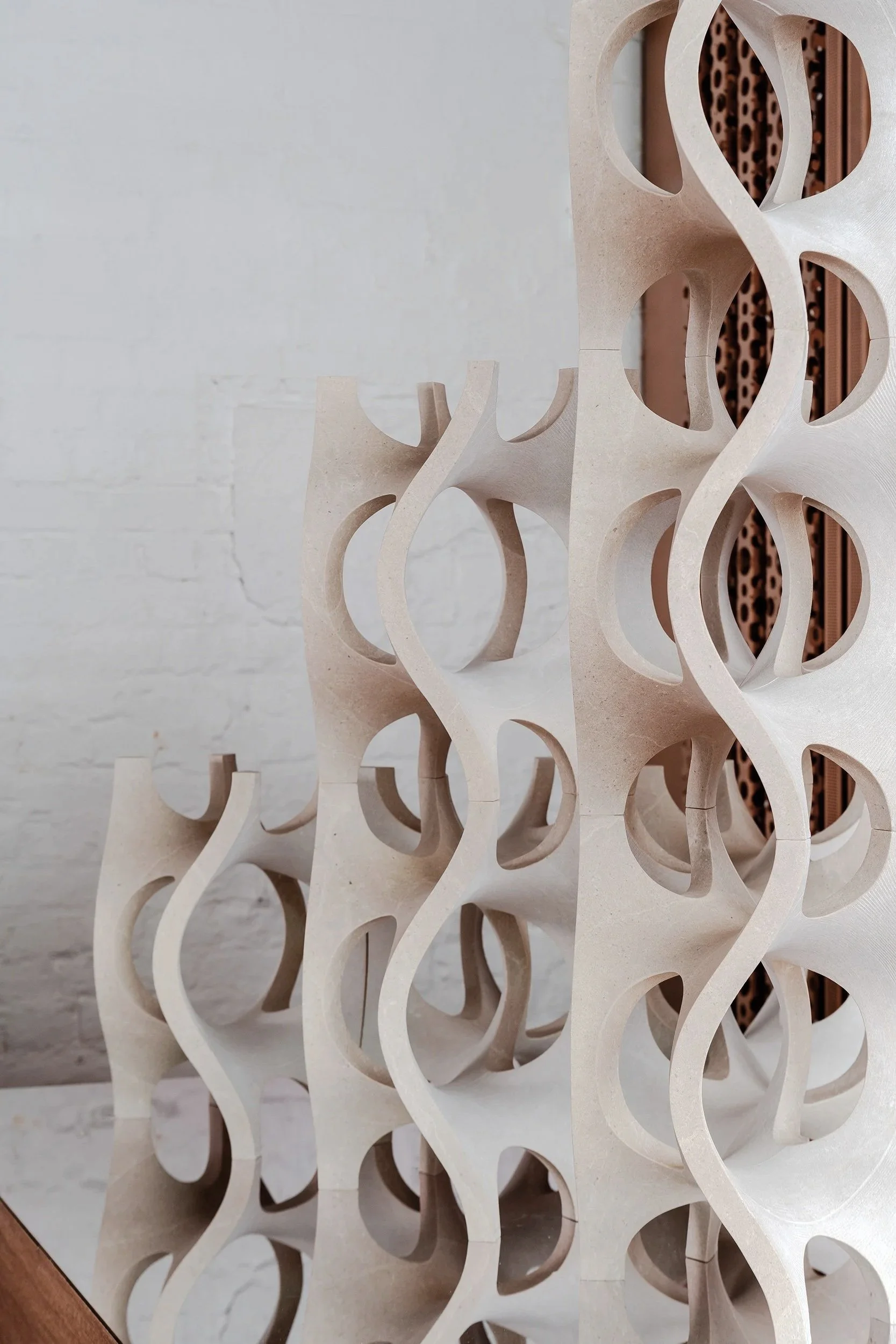
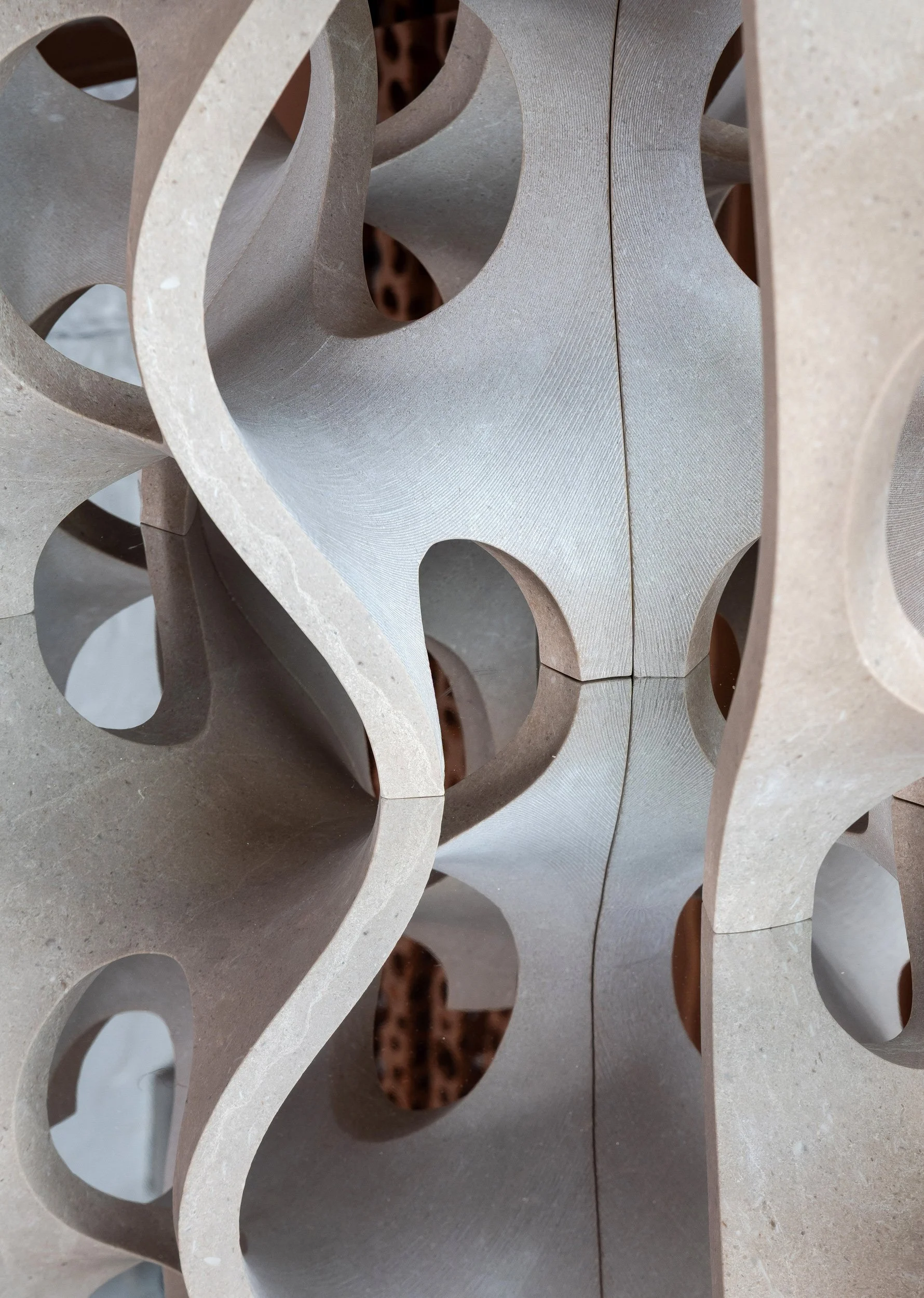
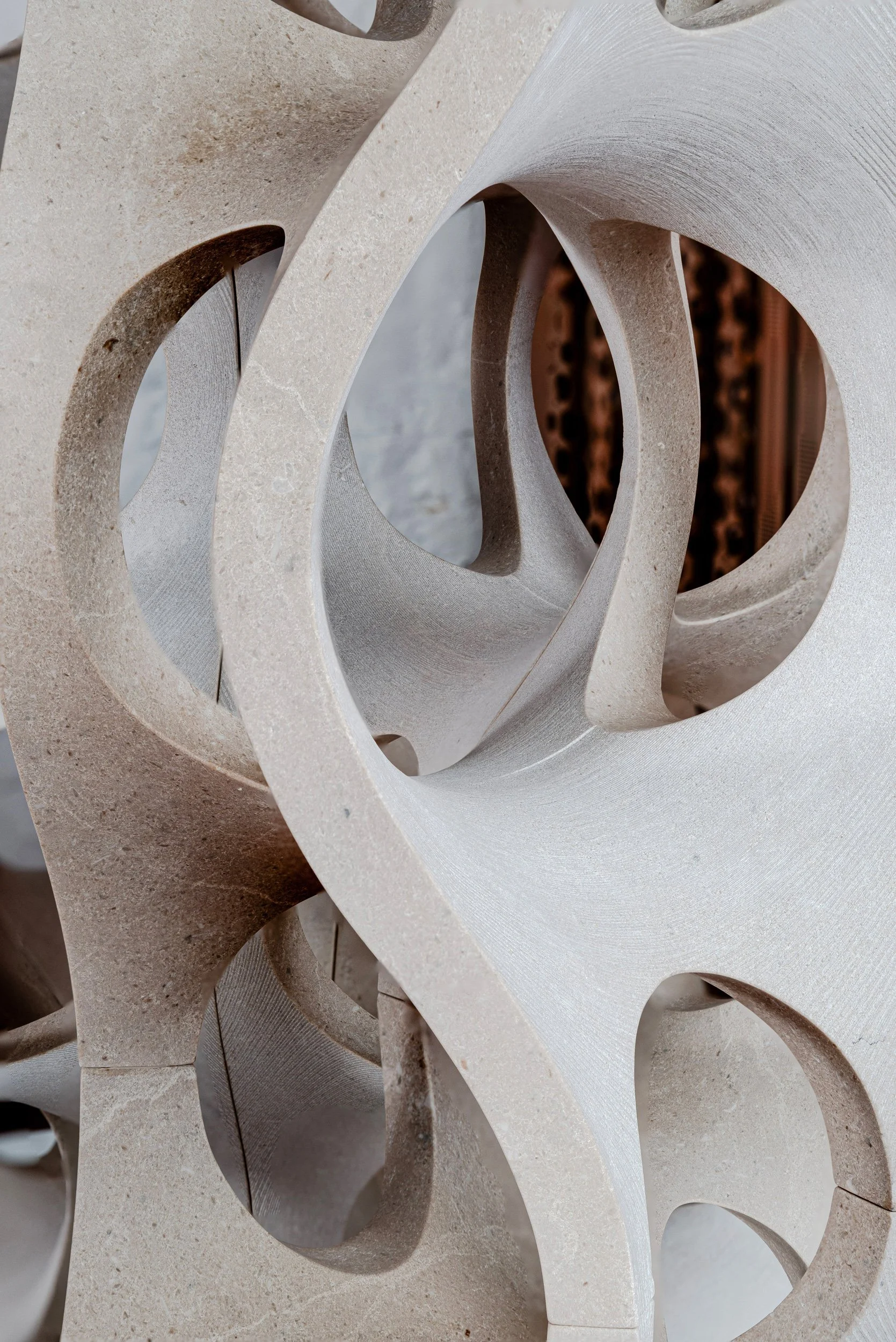
Photos: Neil Perry for EH Smith
Clerkenwell Design Week 2026
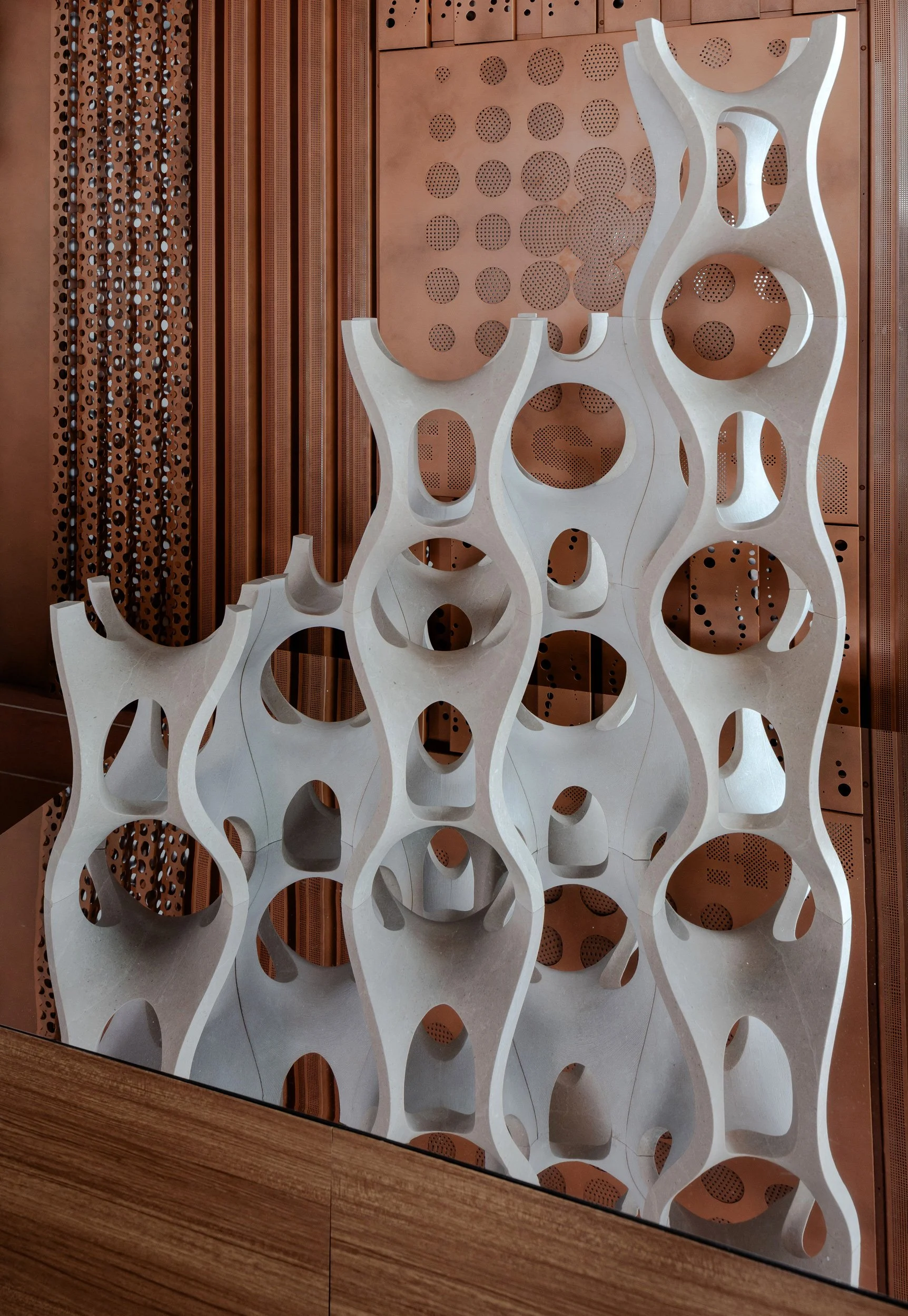
Photo: Neil Perry for EH Smith
Exhibition
Fluid Stone was exhibited during Clerkenwell Design Week 2026. Installed as a pop-up exhibition at the EH Smith Design Centre from 19–21 May, the sculptural installation drew visitors throughout the festival and culminated in a multidisciplinary talk bringing together experts from architecture, engineering, material research and stone production. Event collaborators: AHMM, EH Smith and Materials Council.
Panel Discussion
A central moment of the installation’s presentation, the panel discussion held on 20th of May at EH Smith explored the intersection of computational design, geology and sustainable fabrication. Speakers:
Vlad Tenu, Associate Architect at AHMM
Ian Hunter, Director of Materials Council and Associate Lecturer at Royal College of Art
Paola Blasi, Associate at Arup, Stone specialist & Geologist
Stefano Molinari, Business developer at Cereser Marmi
During the panel discussion accompanying the installation, Vlad presented the system's potential applications in product design, furniture, interiors or architecture.
Design Process
Computational Form-Finding
Originally developed from research initiated by Tenu at the Bartlett School of Architecture in 2009, the project forms part his ongoing exploration into computational geometry, periodic minimal surfaces, advanced fabrication and material innovation.
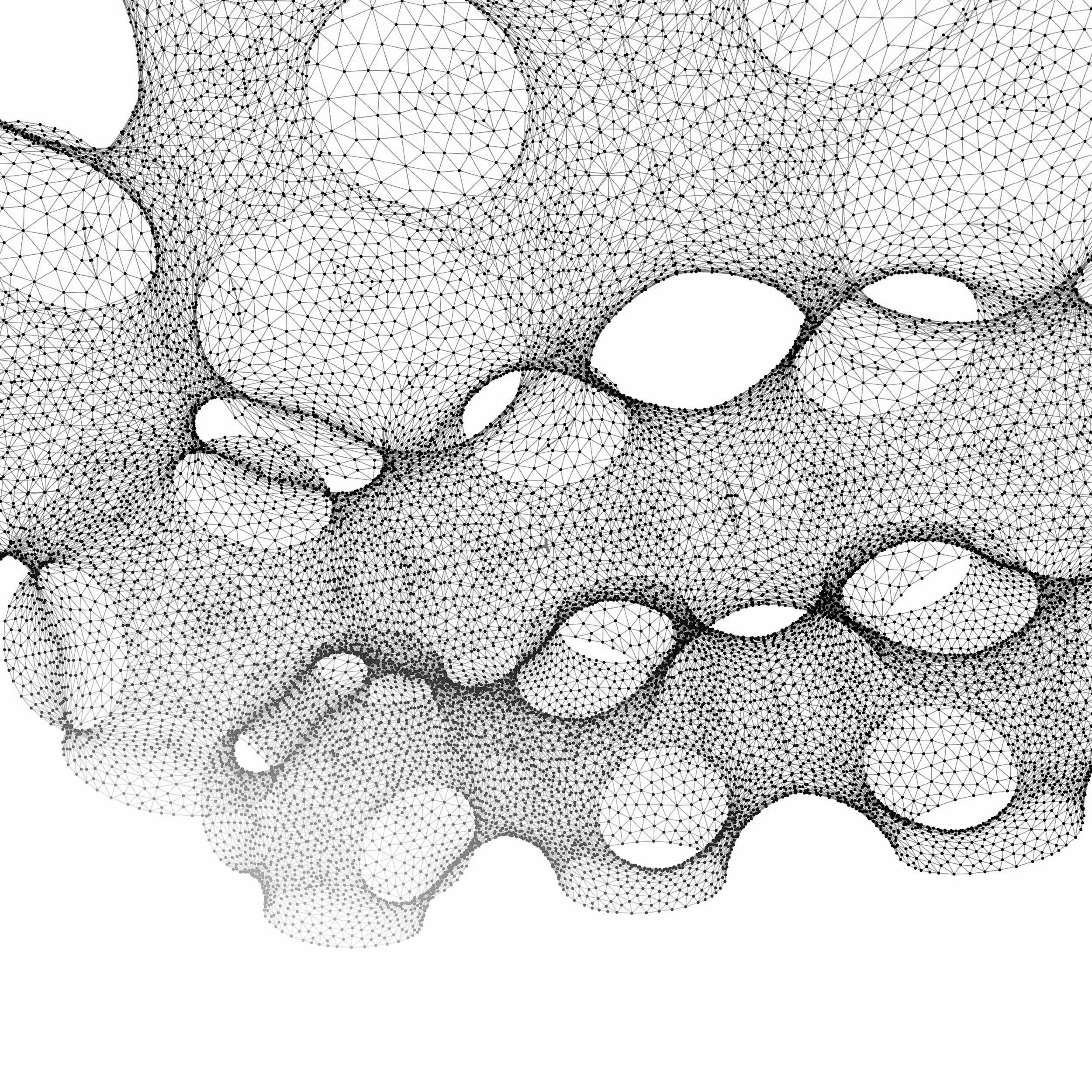
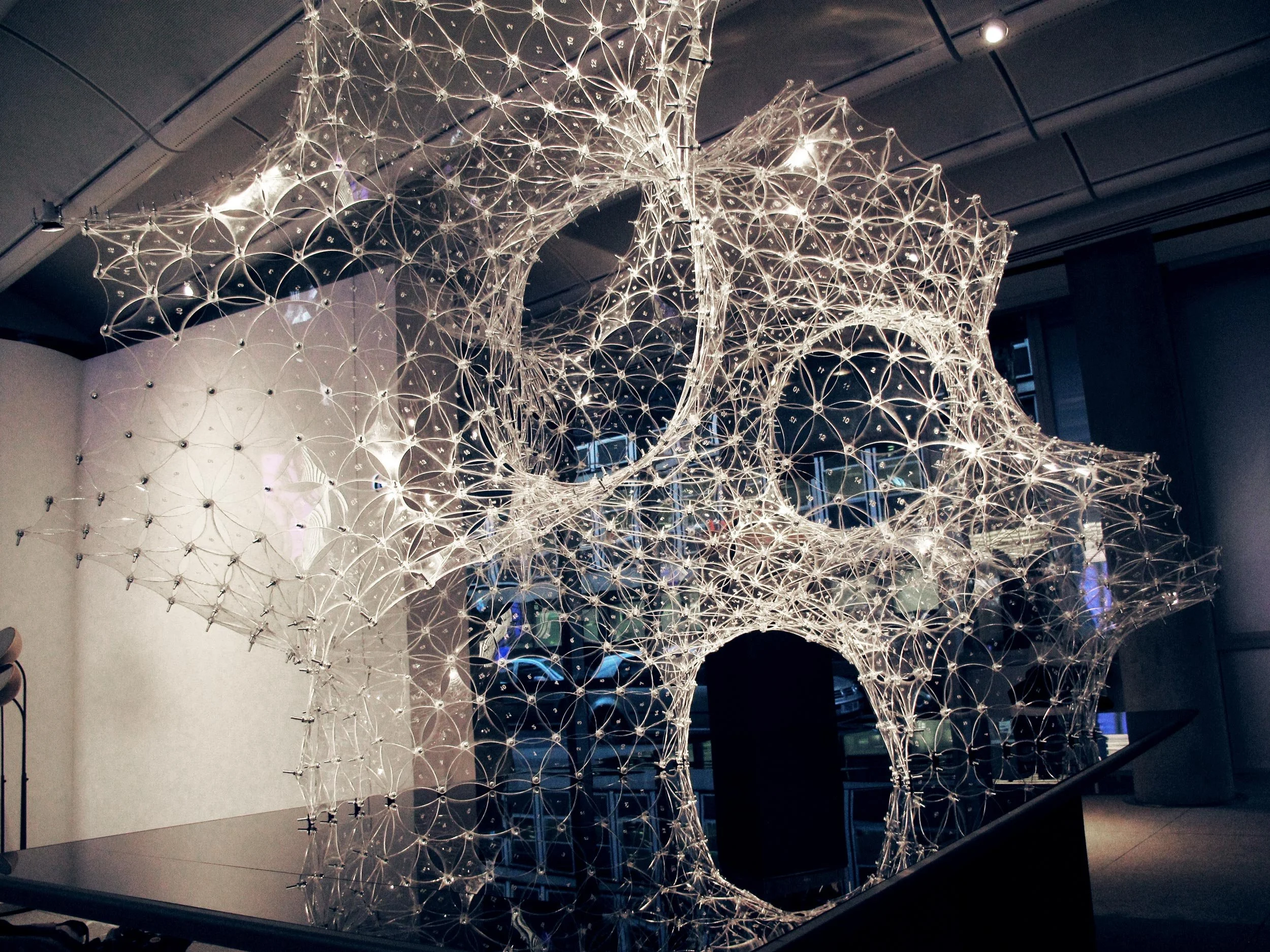
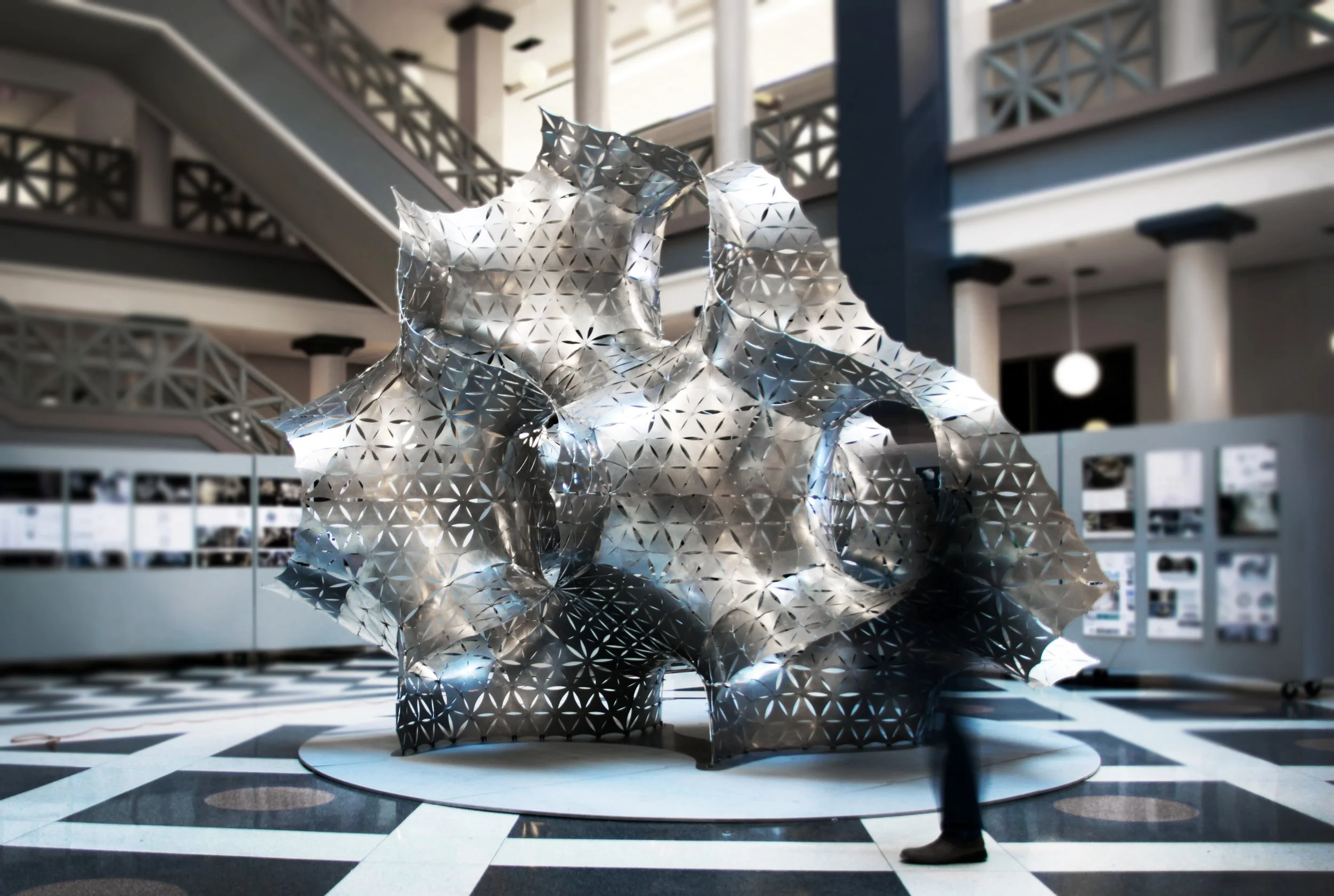
Over the years, various types of mathematical driven geometries have been explored via computational form-finding methods involving particle-spring systems. Driven by Vlad’s interest in fabrication, these geometries have been constructed as prototypes and sculptural installations out of various materials: paper, perspex, aluminium, styrene or timber ply.
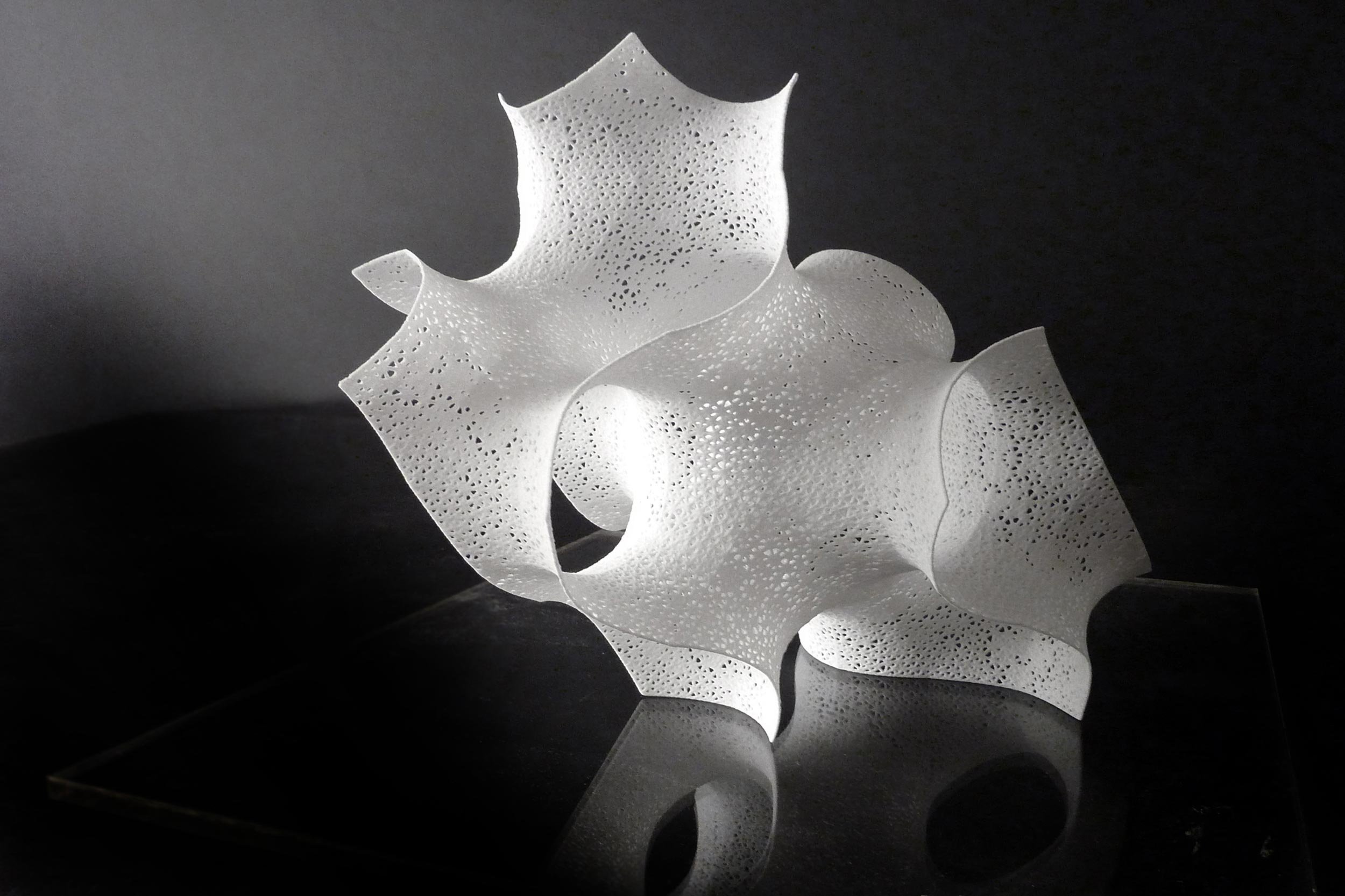
3D Printed Prototype, Bartlett 2009
Form-finding Algorithm, Bartlett 2009
Perspex Prototype, Arup 2010
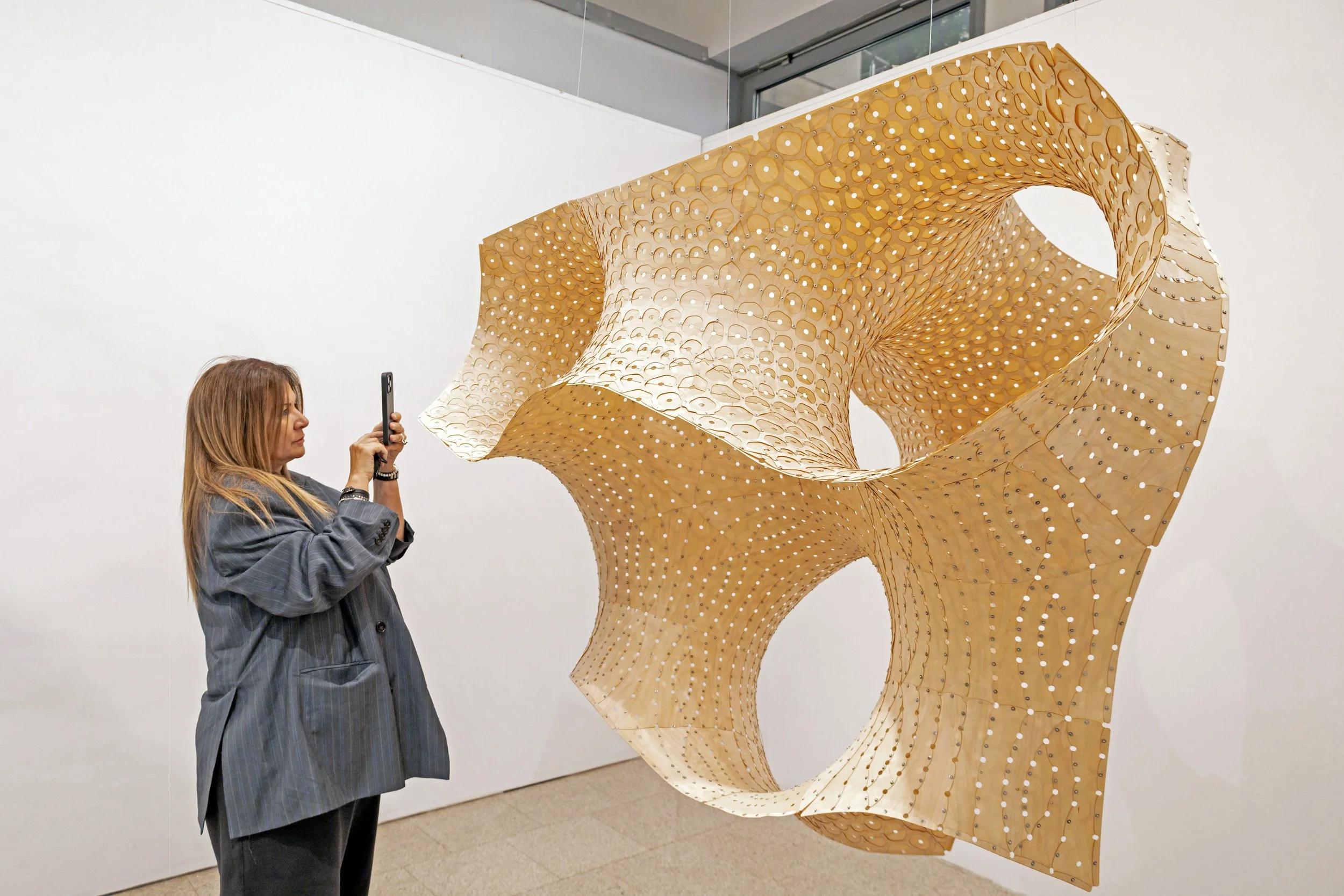
Aluminium, Tex-Fab Houston 2011
Timber Ply, RCW Iasi 2024
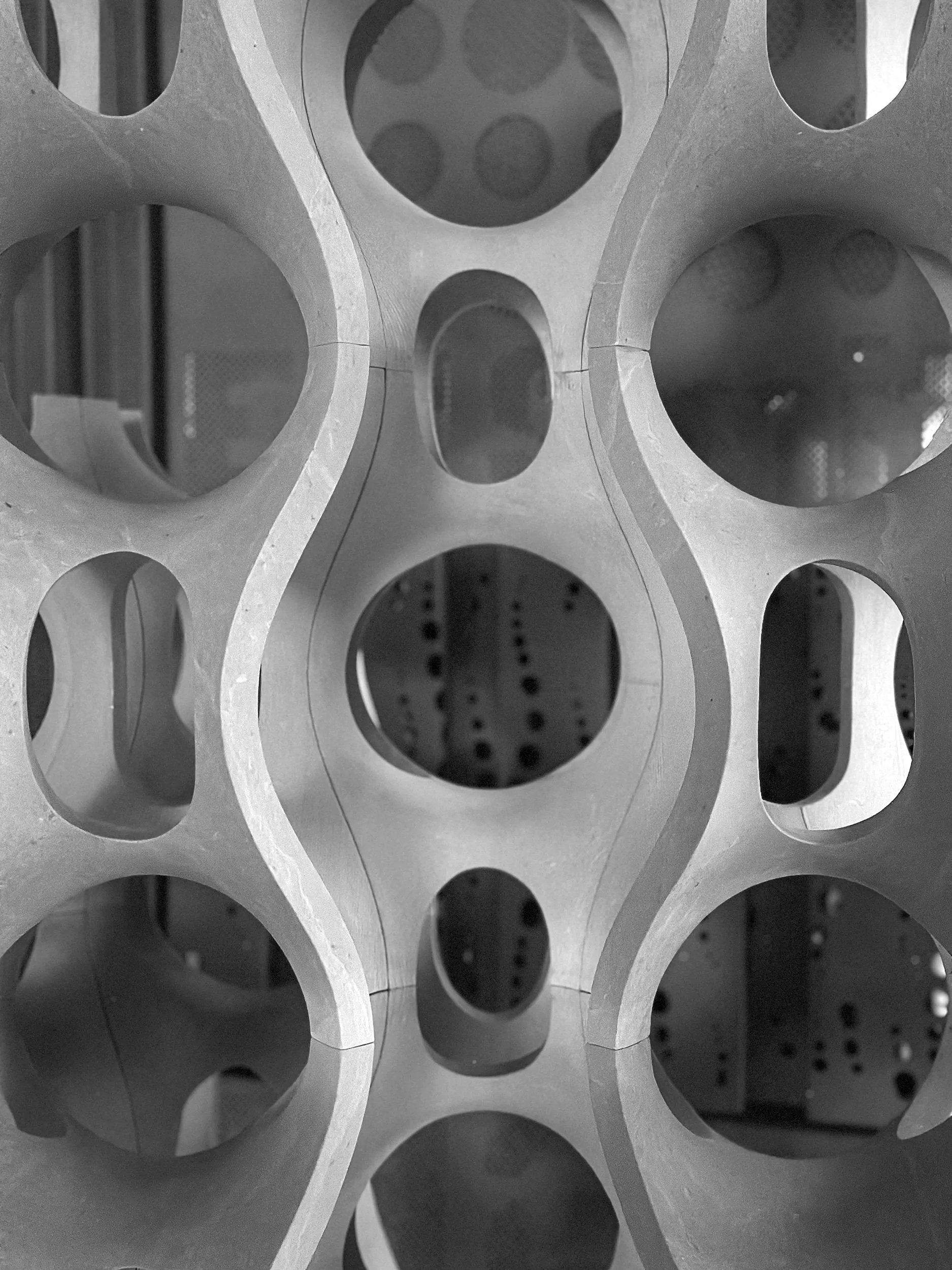
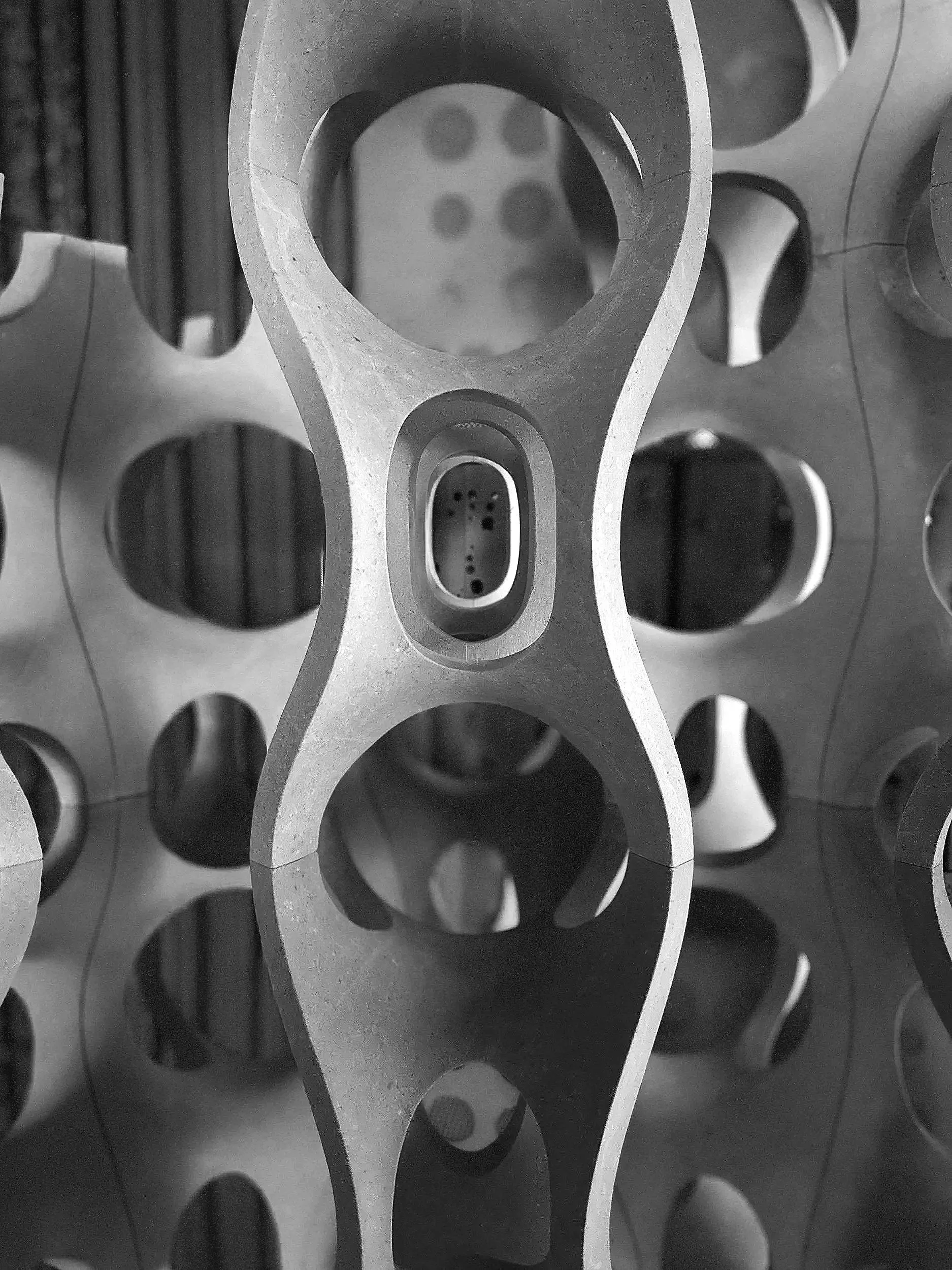
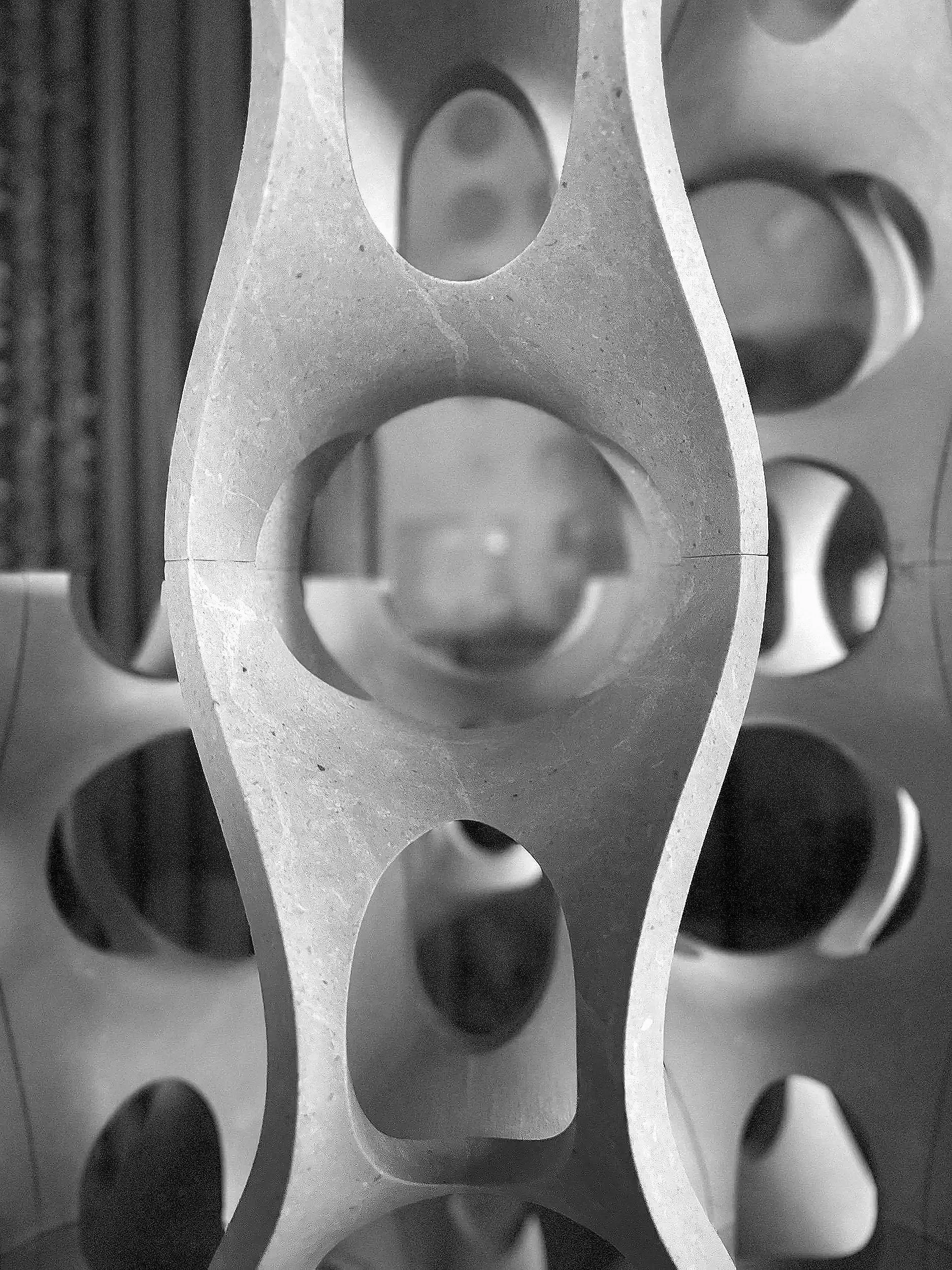
The opportunity of working with stone and robotic fabrication opened up an investigation on how material can be distributed more intelligently for uniform distribution of structural loads. Rather than relying on mass alone, the system achieves strength through geometry, allowing relatively thin stone elements to create self-supporting forms while using material efficiently.
Based on the concept of Minimal Porosity*, the module geometry takes inspiration from nature and was shaped around a specific periodic minimal surface, the Schwarz P - a mathematical form interestingly found in the natural microstructure of sea urchin skeletons.
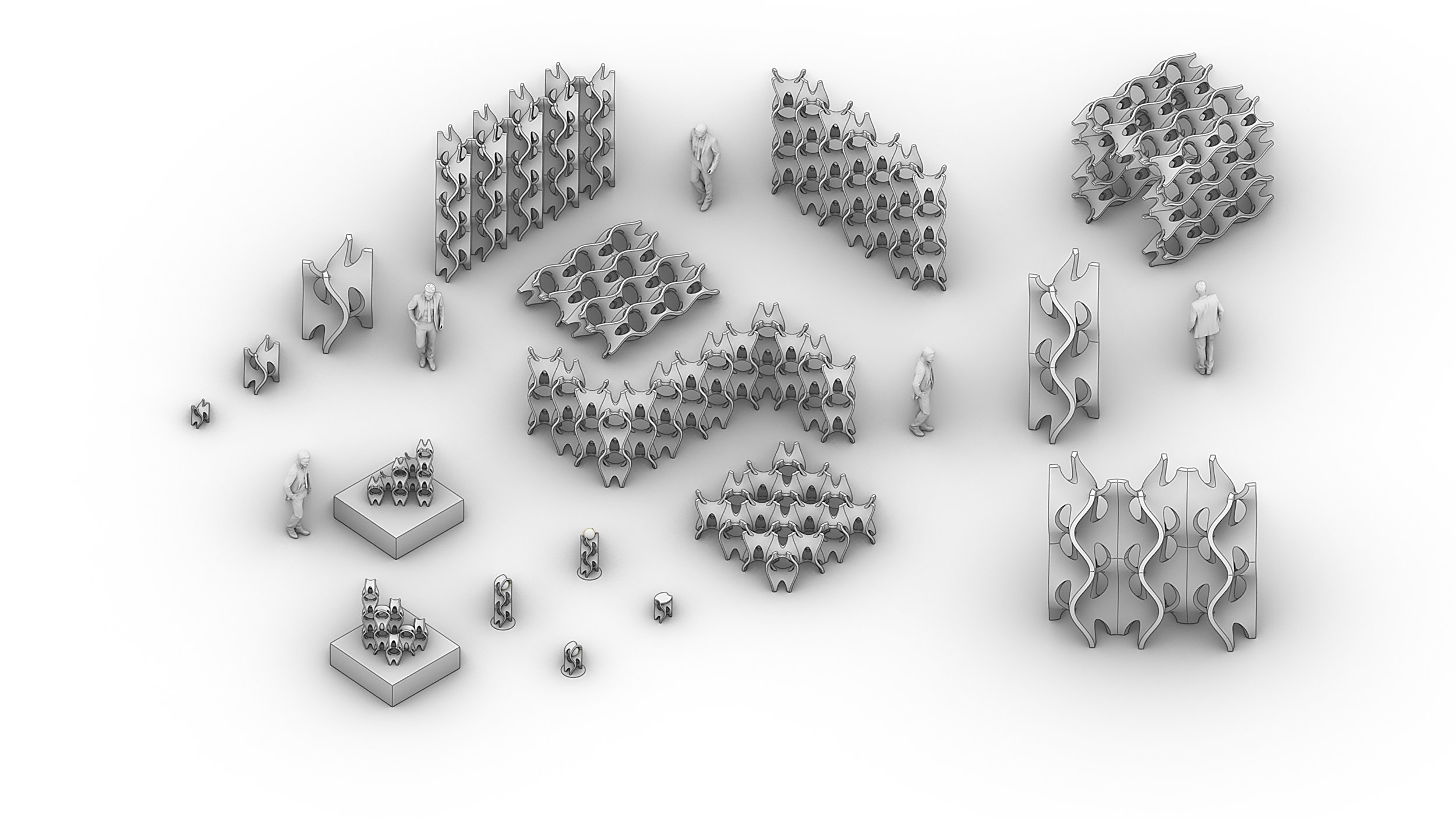
Strength through geometry

*Minimal Porosity was a concept illustrated in a paper proposal for ACADIA 2014 Conference and based on Vlad’s article for Applied Geometries III, International Journal of Interior Architecture +Spatial Design, Houston 2014, entitled ‘Soap Films - On the form of nature and the nature of form’.

Minimal Porosity mount board paper prototype 2014

Structural Ornament
The research also revisits the historical relationship between structure and ornament in stone architecture. Fluid Stone creates self-supporting components in which structural performance and sculptural expression are inseparable, suggesting a contemporary interpretation of structural ornament that can operate across scales, from product design and furniture to interiors and architecture.
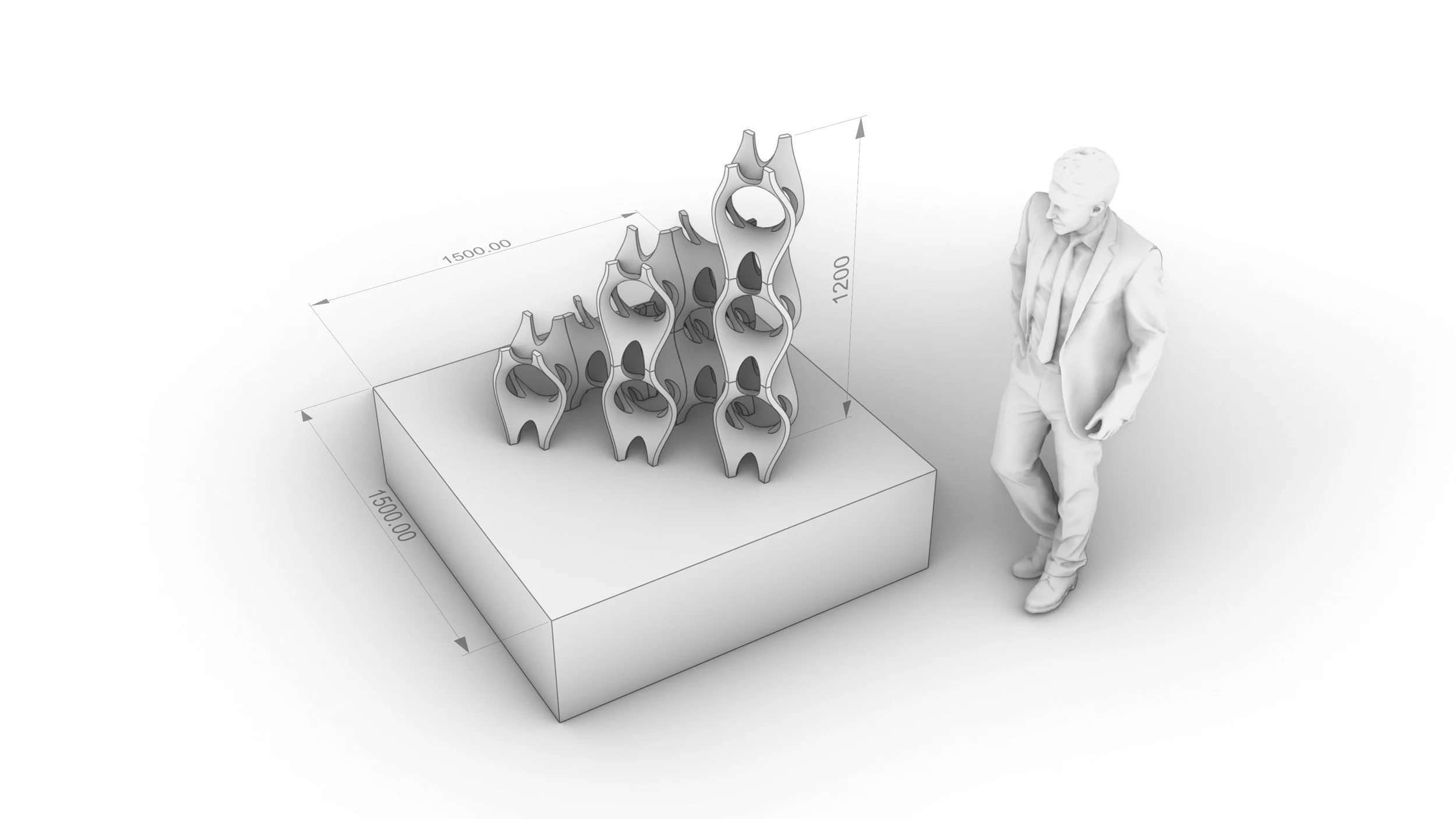
3D Sketch of the Fluid Stone Installation
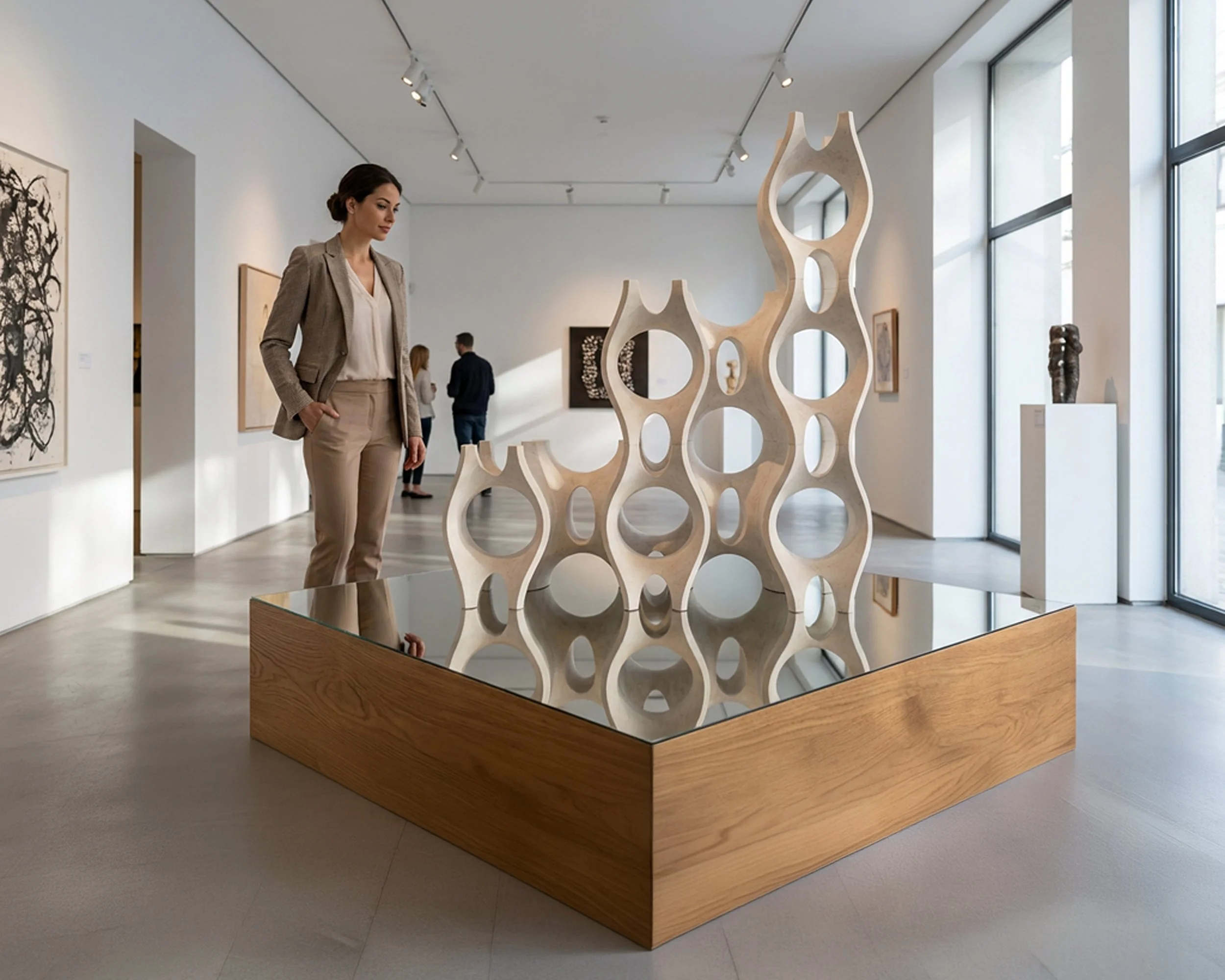
Concept Render of the Fluid Stone Installation
Fabrication
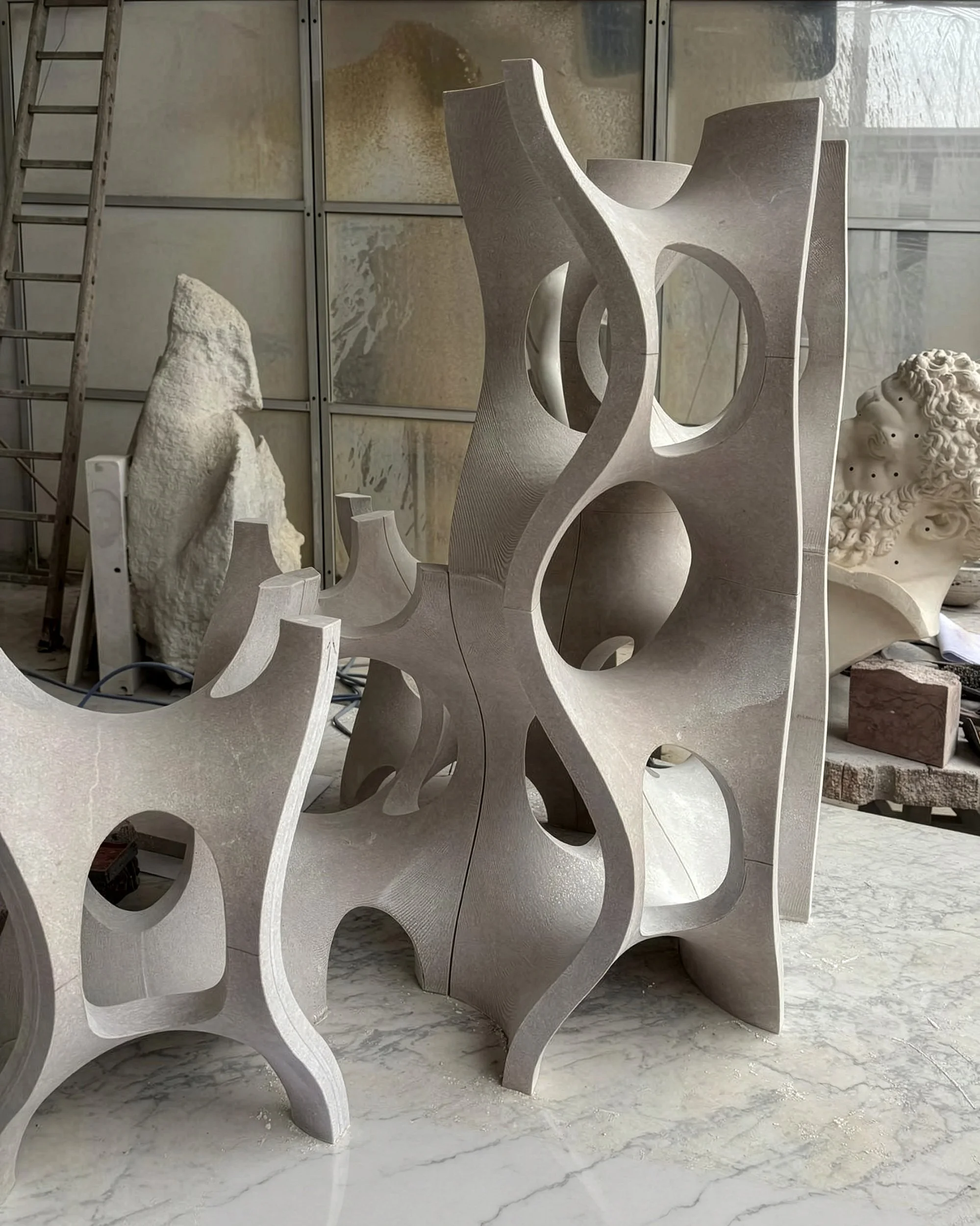
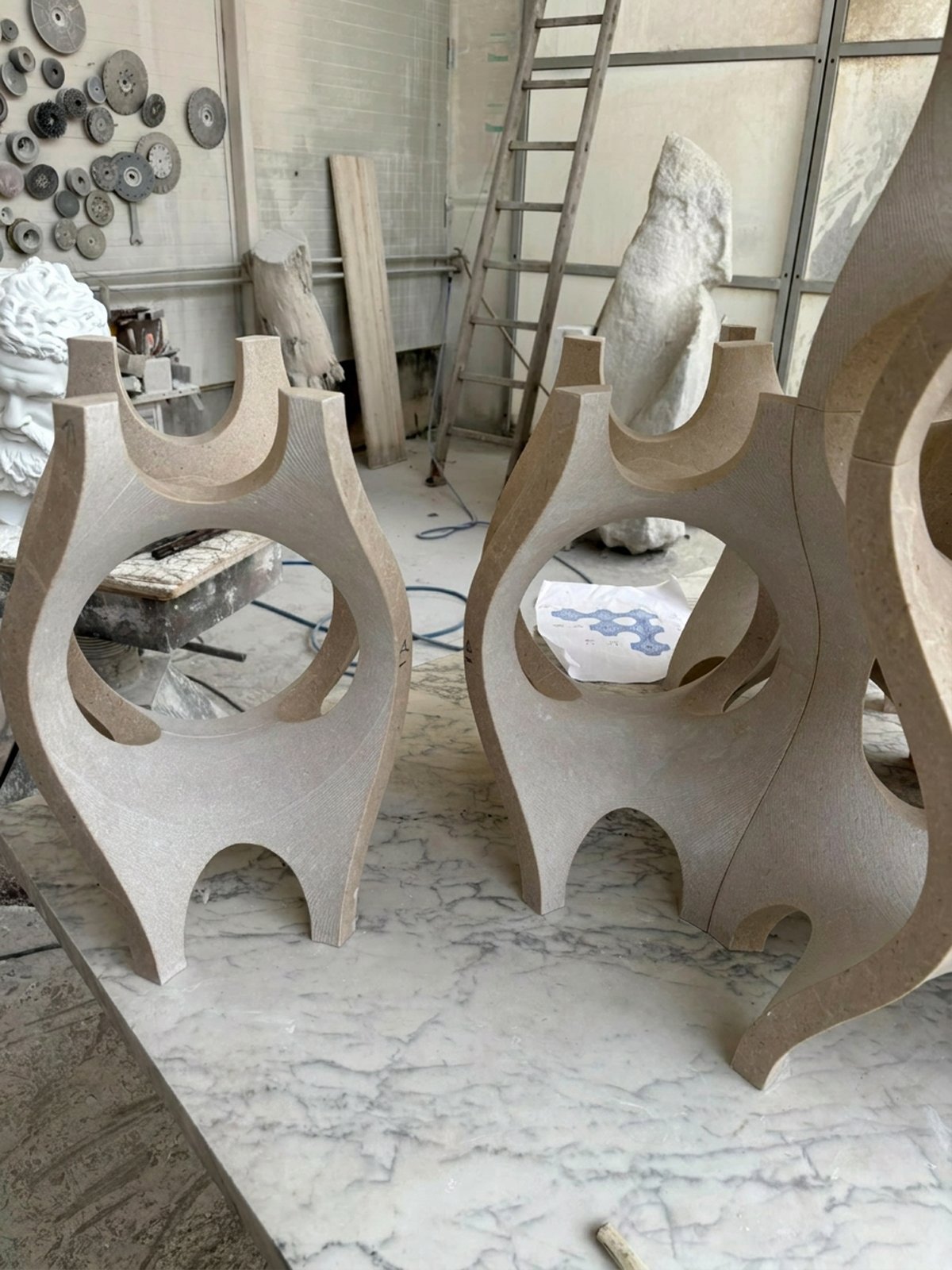
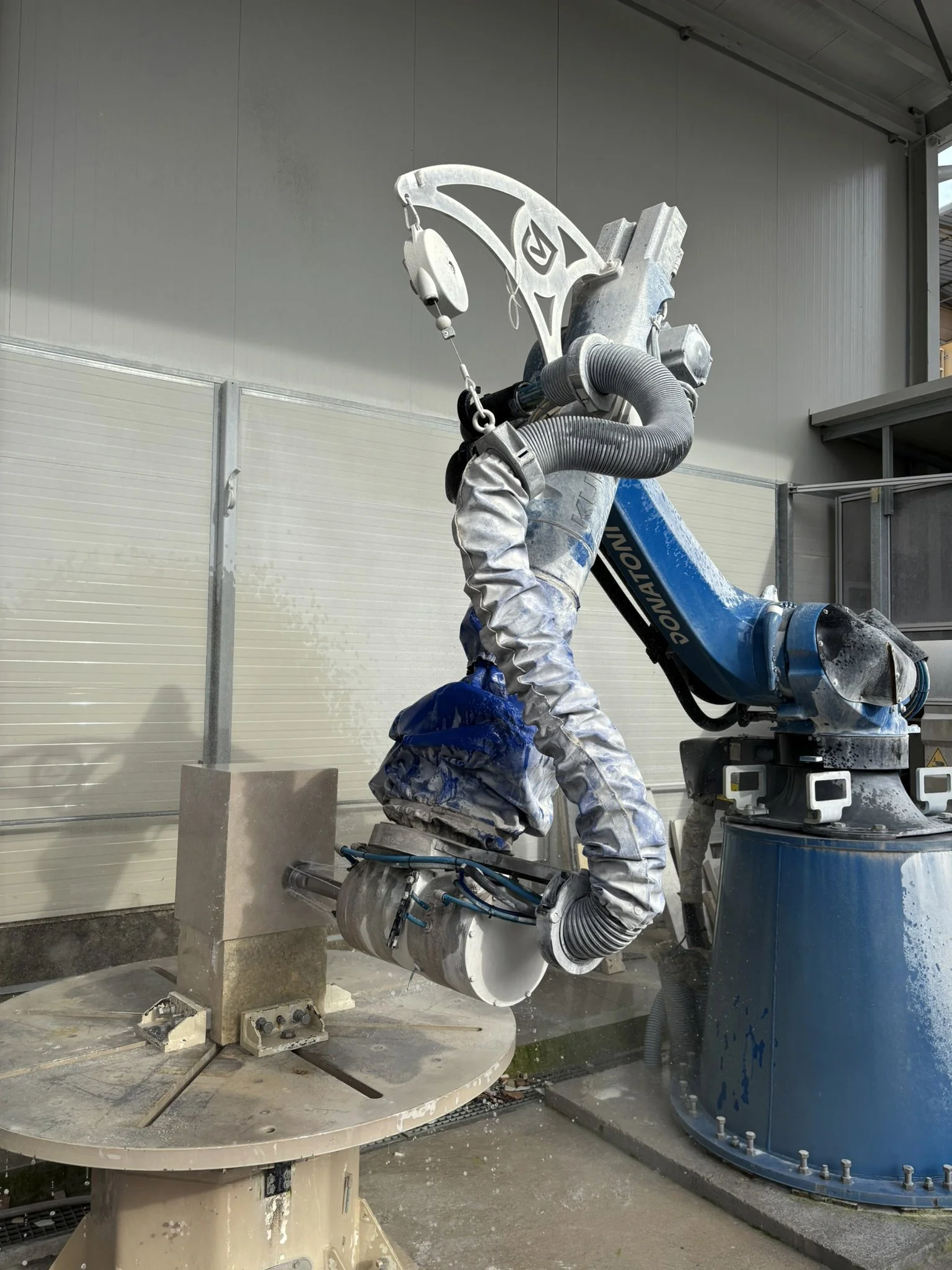
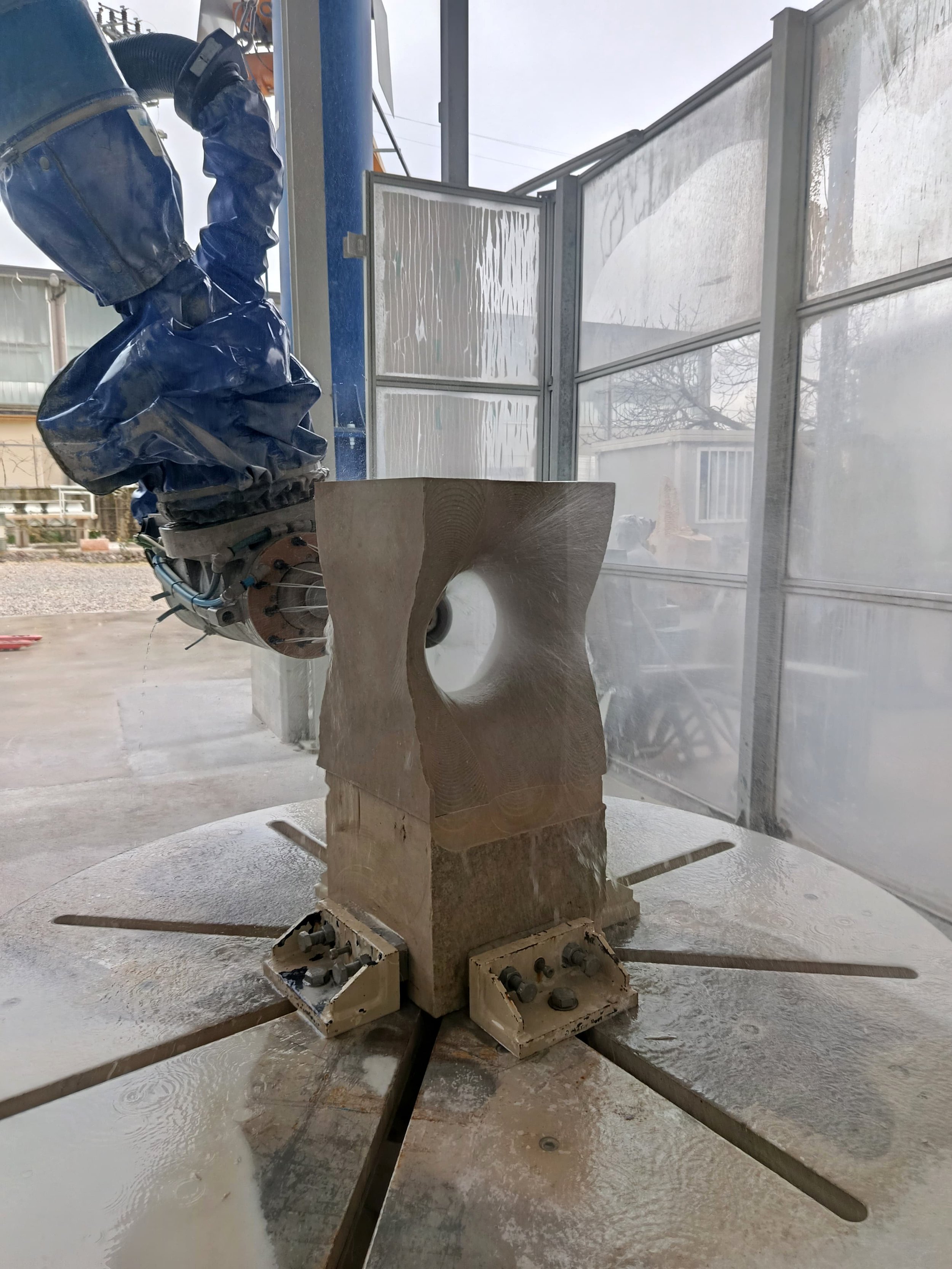
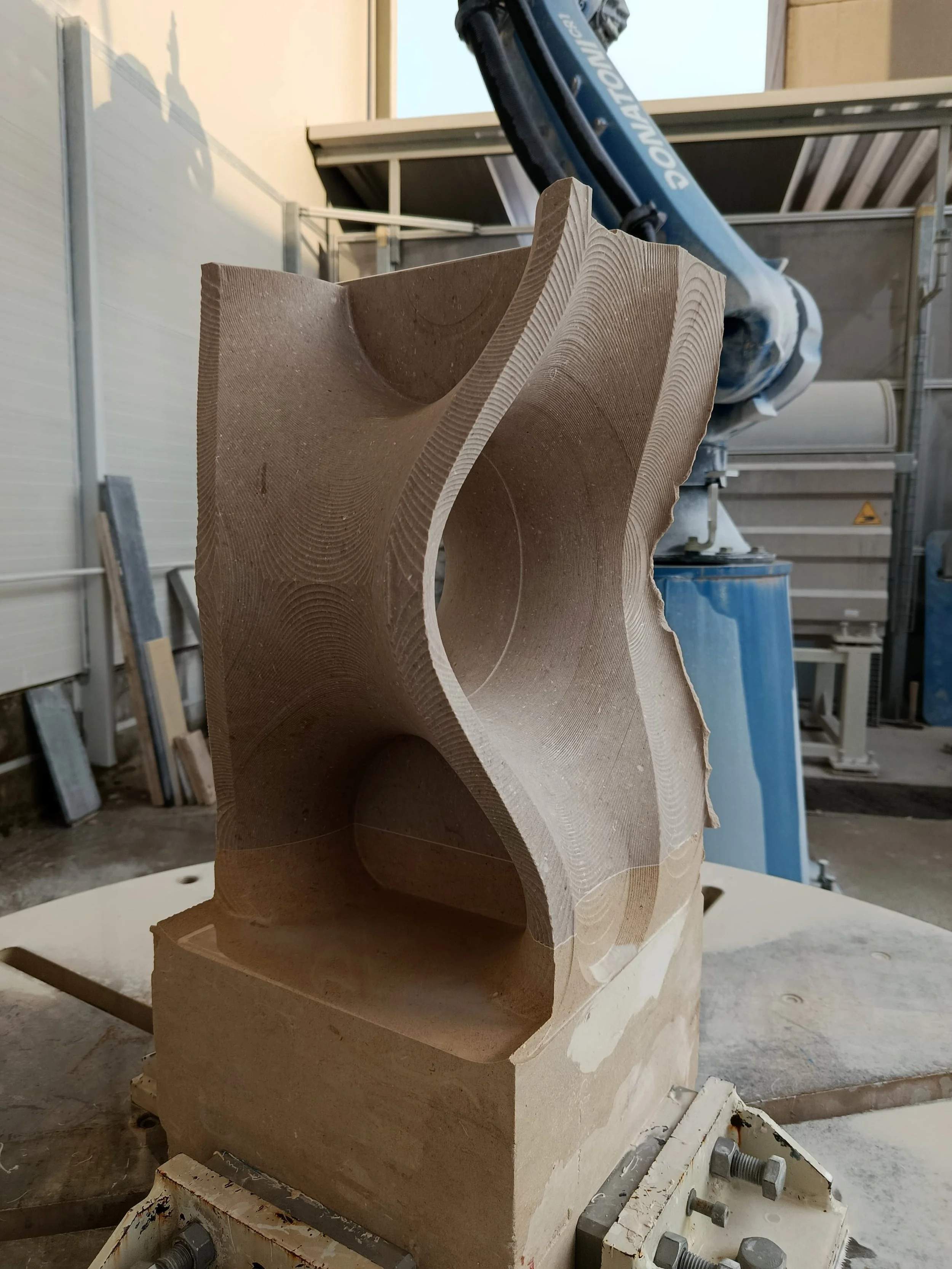
The project was fabricated by Cerser Marmi Spa in Verona, and it was developed using offcuts of San Sebastian limestone sourced from Croatia. Each component was fabricated using a CNC robotic arm for natural stone, translating digitally modelled geometries into precision-carved modules.


Circularity
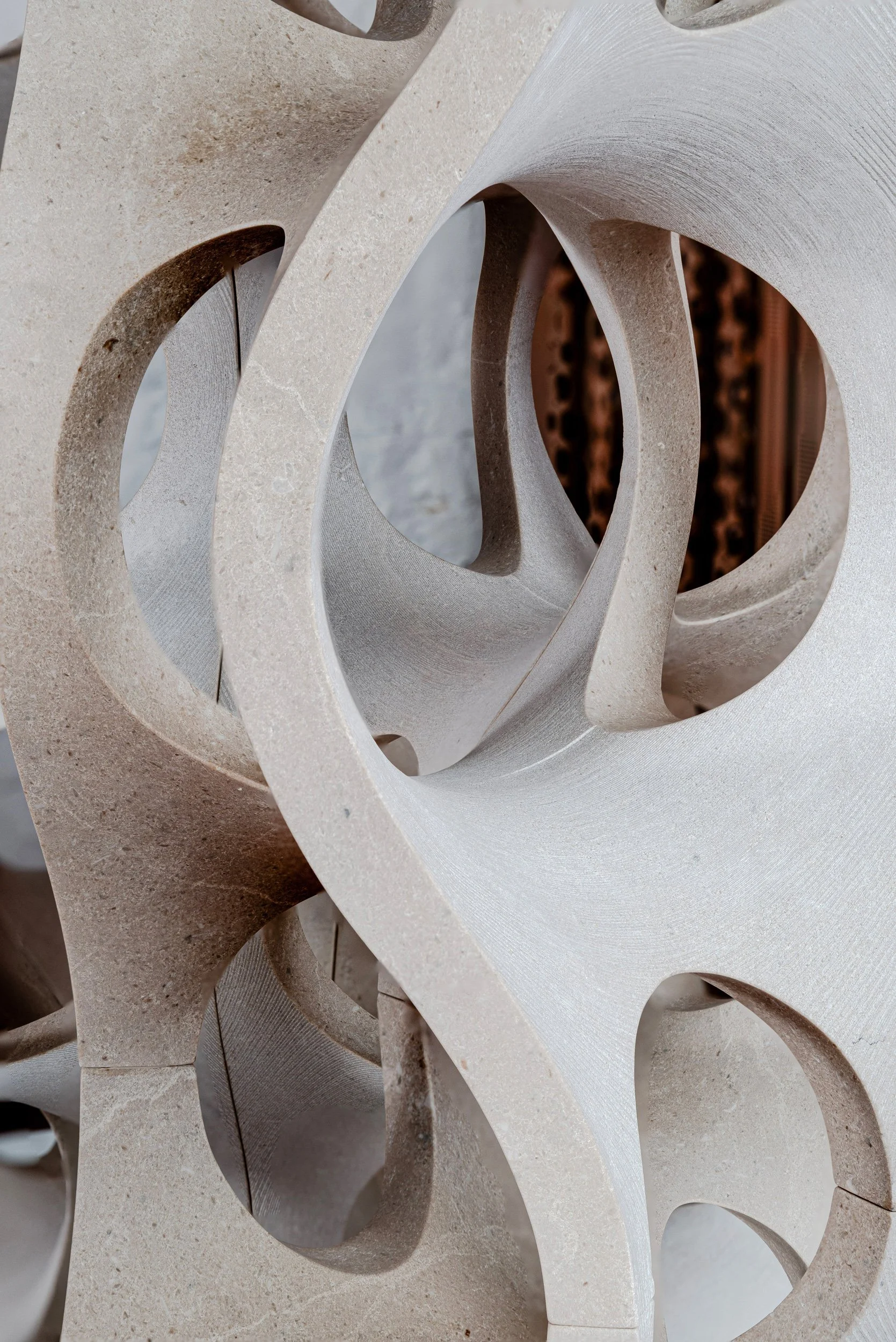
The project proposes a new approach to stone construction rooted in circular design. The installation is composed of ten interlocking limestone modules robotically carved from reclaimed blocks of San Sebastian limestone. The stone was sourced from material that would otherwise remain underutilised within the quarrying process, giving a new purpose to blocks often overlooked in conventional production.
By using quarry waste as a raw material and creating components that can be disassembled and reconfigured, Fluid Stone explores how natural stone can become part of a more adaptable architectural system.
A New Life for Quarry Waste
One System, Multiple Applications
FLUID STONE is conceived as a scalable design system rather than a single object or installation.
Through a combination of computational geometry, robotic fabrication and modular assembly, the same family of stone components can be adapted to different contexts and scales, from lighting and furniture to interior architecture and building envelopes.
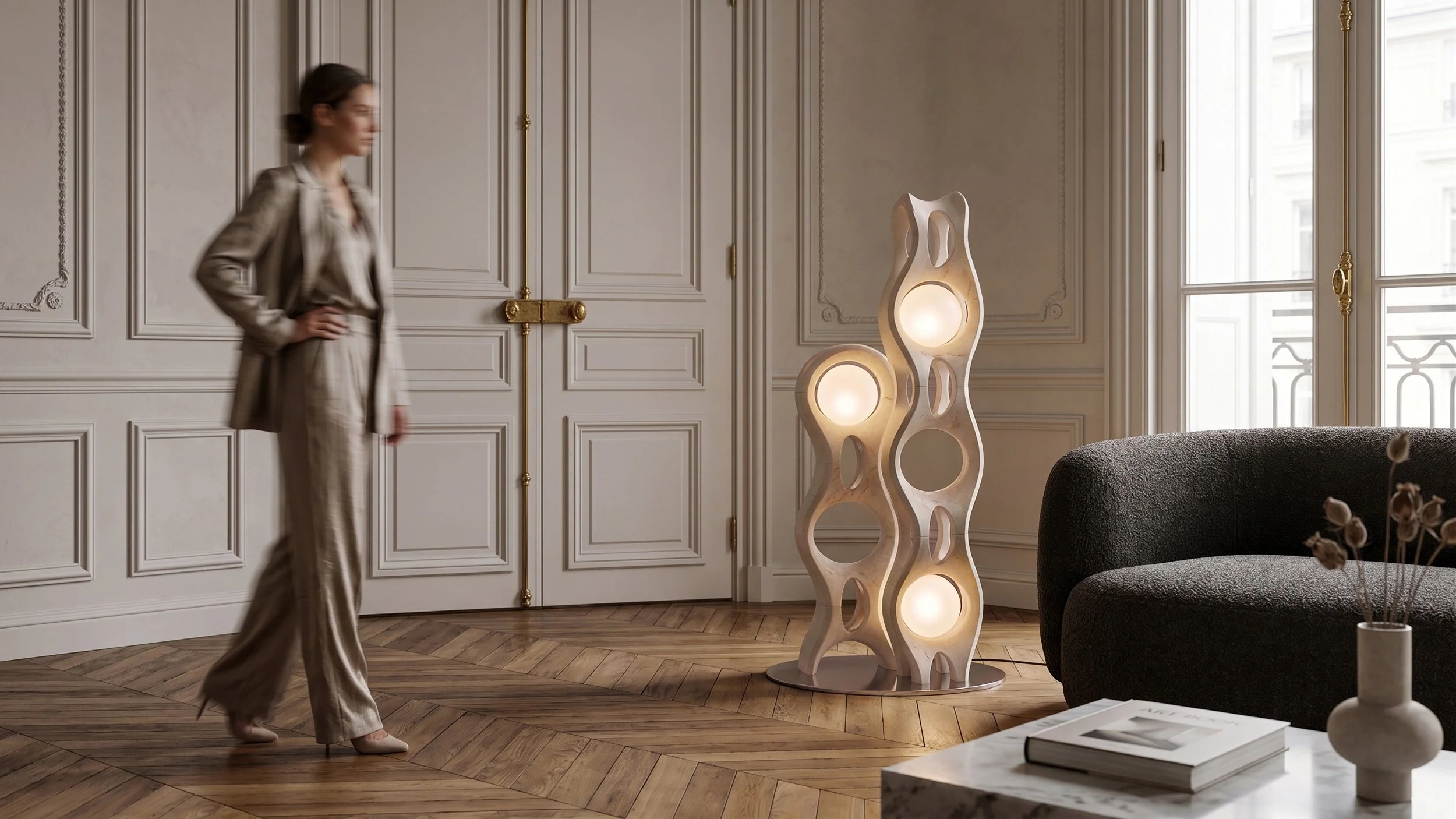
The porous geometries of Fluid Stone transform stone into a medium for light.The intricate openings filter and diffuse illumination, creating atmospheric lighting objects that reveal the depth and complexity of the material.
Lighting
Carving Light from Stone
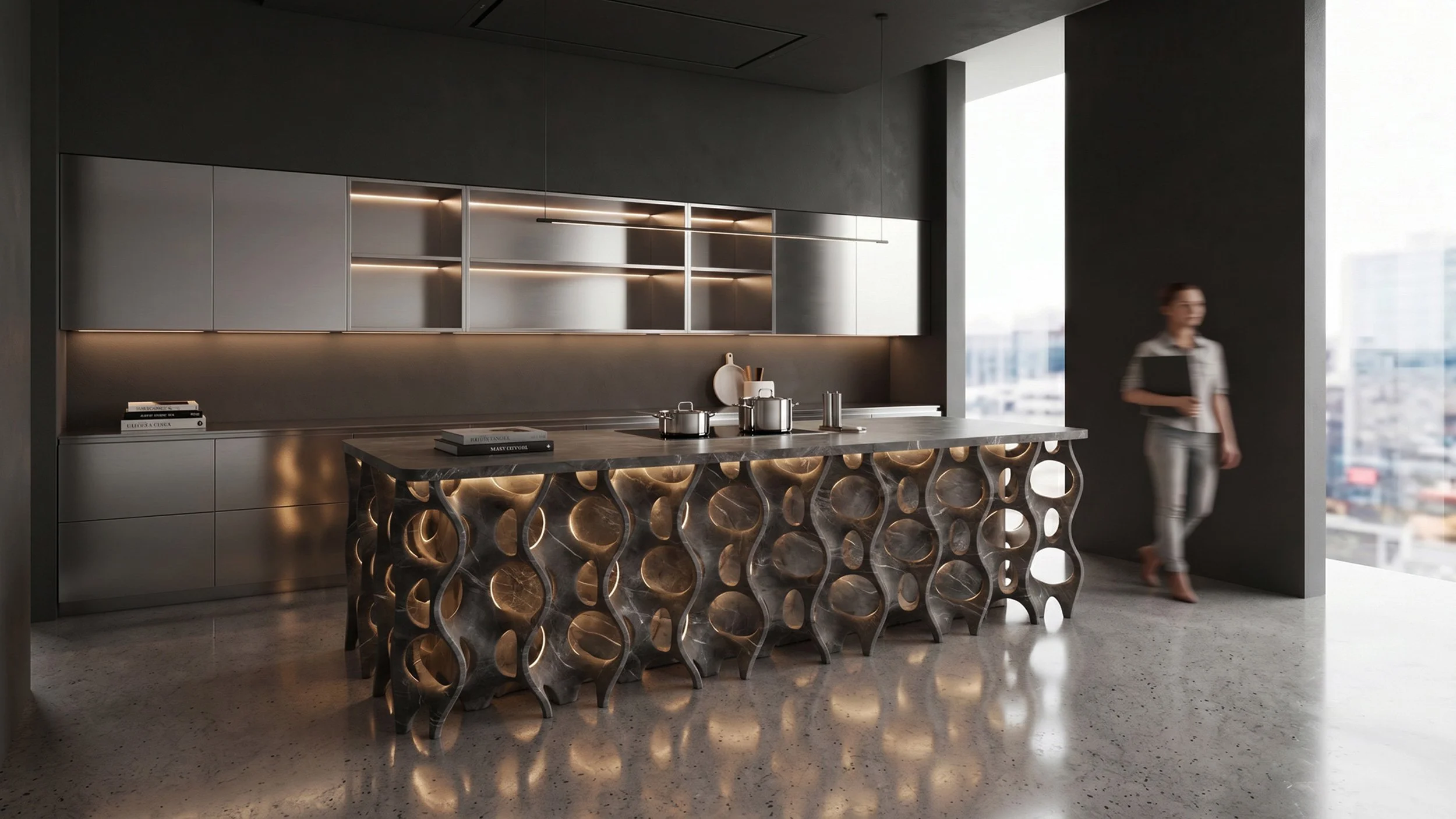
Furniture
Sculptural objects for everyday use
Fluid Stone furniture explores how structural geometry can become functional design.
The modular system enables benches, coffee tables, consoles and seating elements that combine durability, material efficiency and sculptural presence.
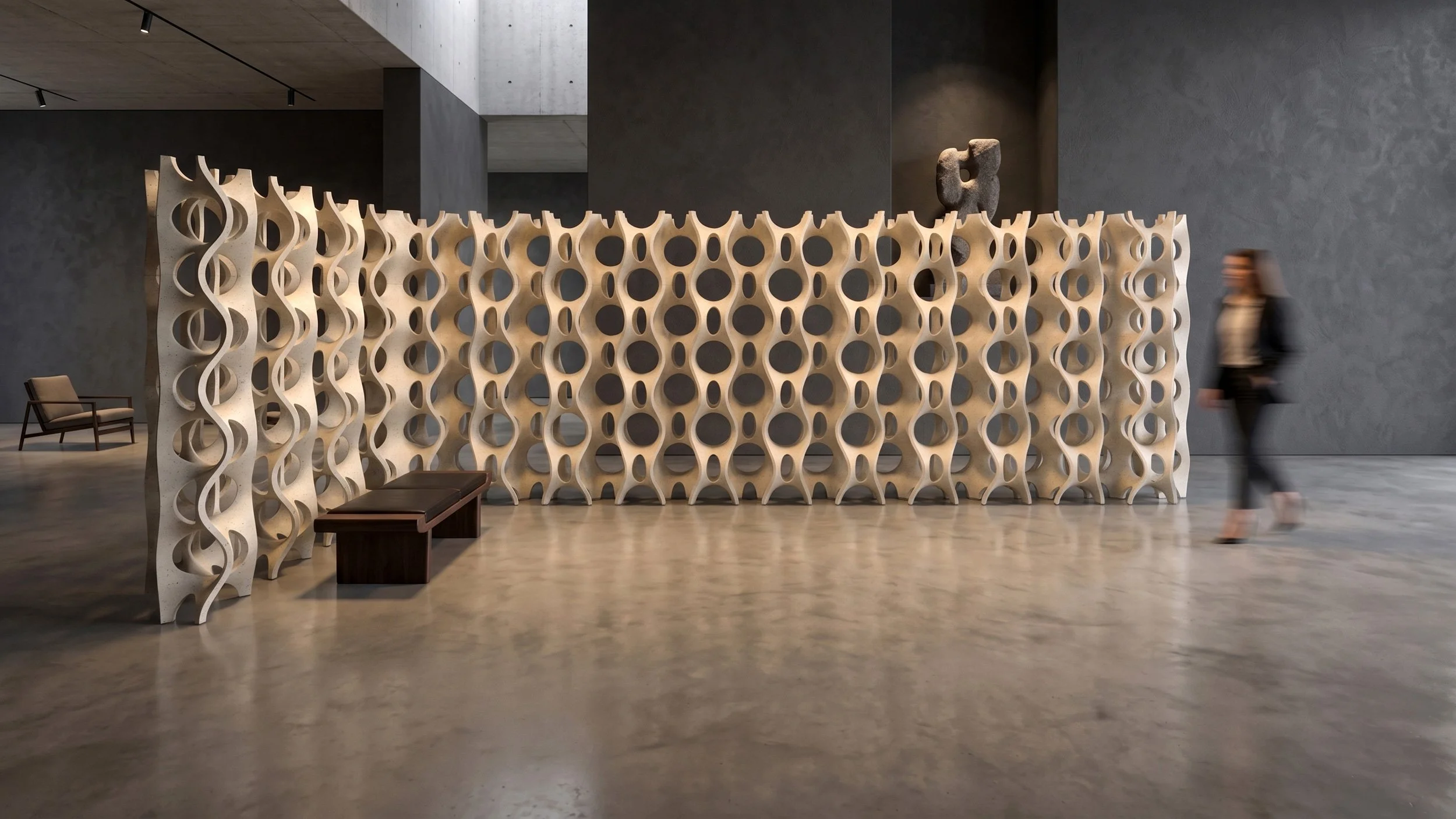
Interiors
Fluid Stone partitions create spatial separation without enclosure.
The porous geometry allows light, air and visual connections to pass through while defining zones within homes, workplaces and hospitality environments.
Porous Boundaries
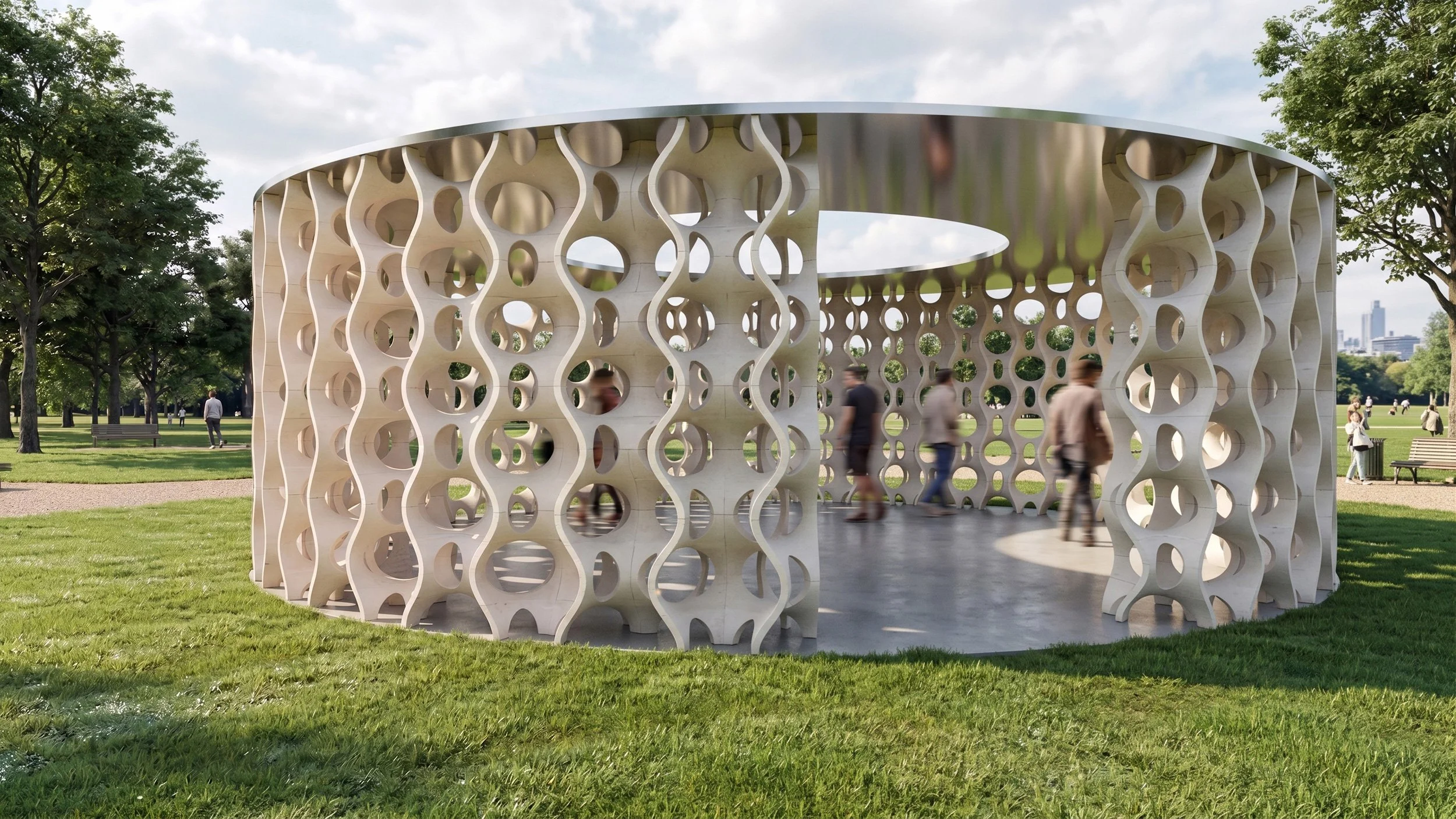
Architecture
Stone that Breathes
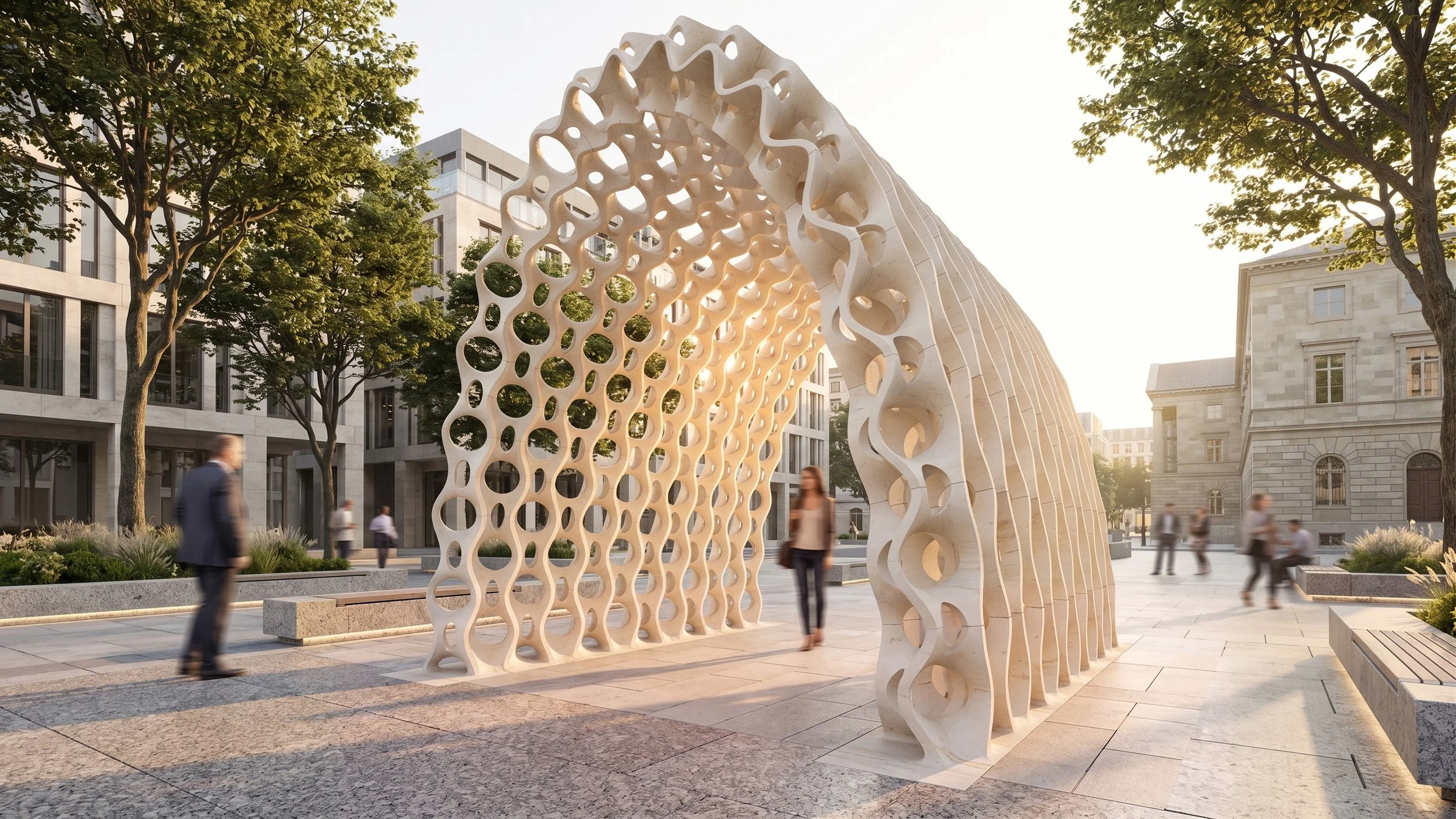
Fluid Stone demonstrates how a single modular component can generate inhabitable structures.The geometry provides opportunities for shading, privacy, ventilation and visual identity while maintaining the durability and longevity of stone.
By aggregating individual modules into continuous surfaces, the system creates lightweight screens that blur the boundary between sculpture and architecture.
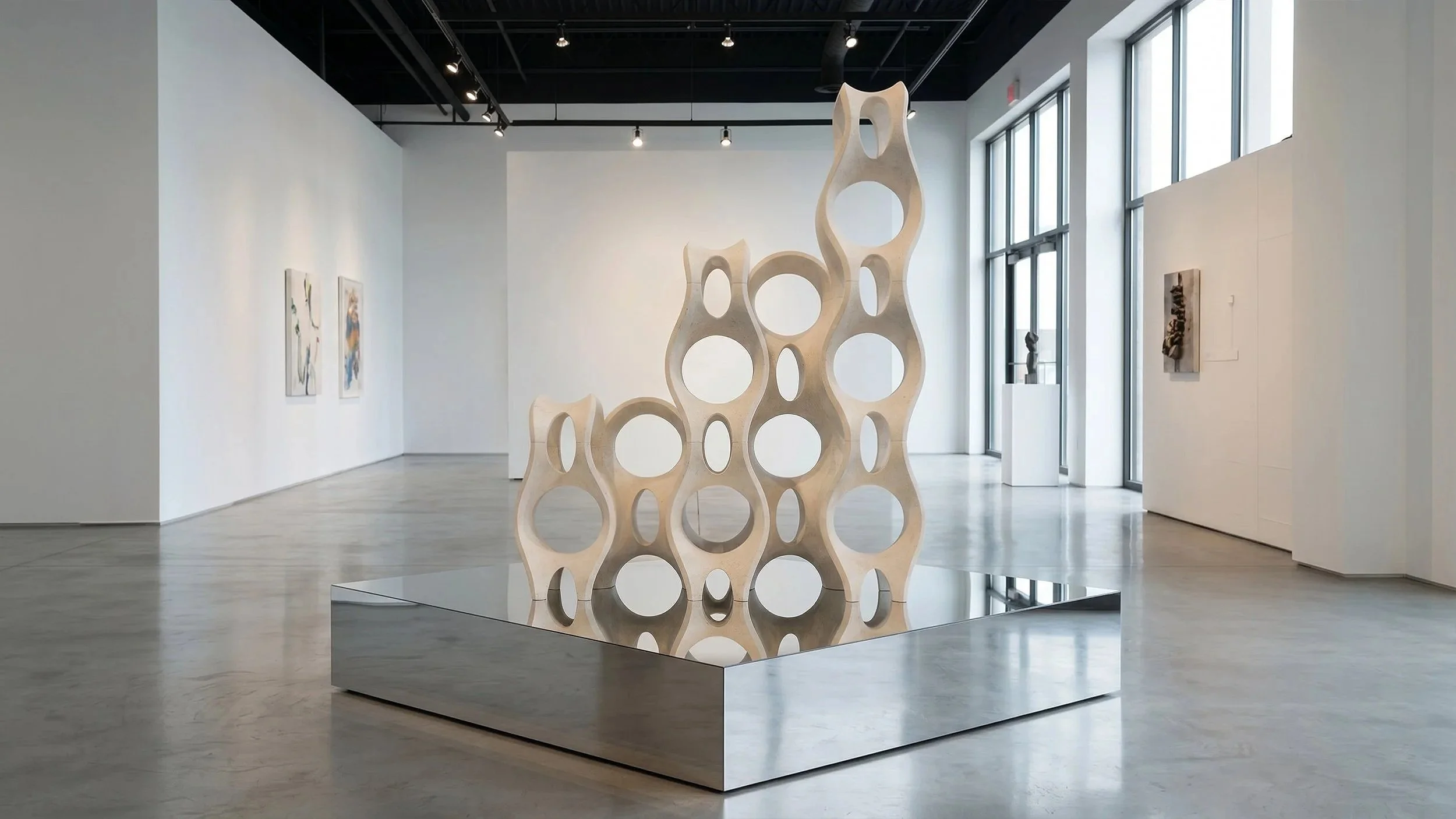
Sculpture
Fluid Stone Sculptures occupy a space between the organic and the algorithmic. Their flowing geometries appear simultaneously ancient and futuristic, evoking natural formations shaped by time while expressing the precision of digital design and robotic fabrication. The result is a body of work that invites contemplation of the relationship between nature, mathematics and material transformation.
Between Nature and Mathematics
Fluid Stone thrives on new applications. Whether you're looking for a sculptural focal point, a permeable partition, a bespoke piece of furniture or an architectural installation, we'd love to hear from you. And if you have an idea that doesn't fit any of those categories, even better.